“Yellowjackets” premieres on Sunday, March 26, and the buzzy series hasn’t lost any sting in its sophomore season. Showrunners ratchet up the tension right off the bat, while somehow managing to lean even harder into their exquisite portraits of post-traumatic stress disorder.
But as season one’s mysteries are solved, an ugly truth is exposed. This show might be addictive, but the secret to its success is as cynical as it is effective: brutal levels of female rage.
(Spoilers for “Yellowjackets” below.)
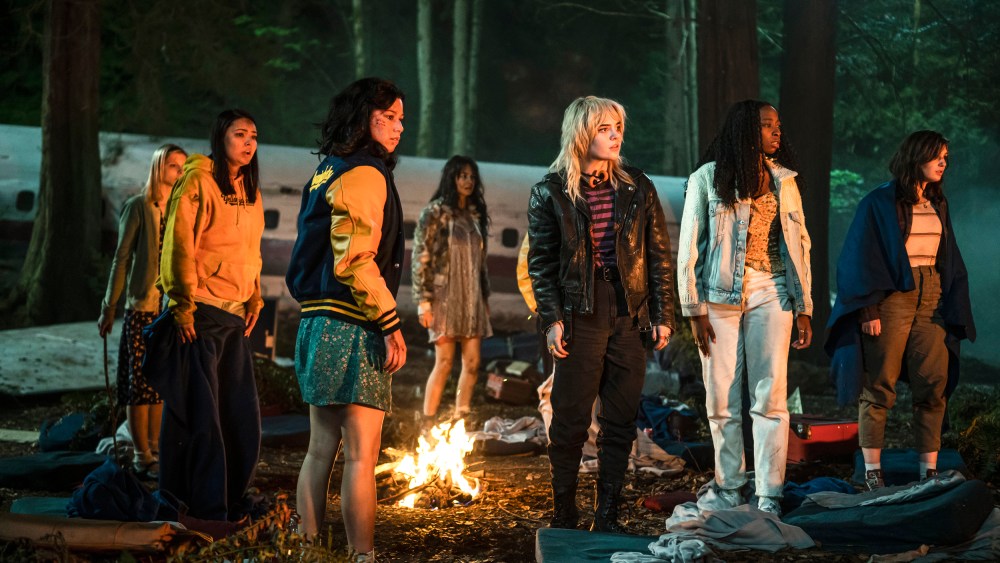
With strong notes of both “Lost” and “Lord of the Flies,” the series takes place in two different timelines. “Then” is 1996, senior year for the stars of the Yellowjackets girls’ soccer team, whose private plane crashes in the Ontario wilderness on the way to the national championship. The survivors are stranded for 19 very long months. “Now” is 2021, 25 years later, as survivors Shauna, Taissa, Misty and Natalie try to get on with their lives, only to discover someone — or something — wants to dredge the horror back up. The show is also a paean to 1990s culture: As teens, the girls read “Sassy” and wear flannel; the soundtrack features PJ Harvey; characters dance to Montell Jordan playing from a Walkman and sing Seal’s “Kiss From A Rose.” The present-day storyline is also something of a celebrity time capsule — the older versions of the main characters are played by Melanie Lynskey, Tawny Cypress, Christina Ricci, and Juliette Lewis, almost all 90s-era It Girls.
At the center is a provocative puzzlebox mystery. Season one dropped titillating hints about historical horrors, especially once winter descended on the stranded soccer team and a pack of girls realize “nothing tastes as good as skinny feels” is a blatant lie.
Season two doesn’t make fans wait long for answers. The premiere cheerfully features a now-heavily pregnant teen Shauna (Sophie Nélisse) chowing down on a human ear, with Tori Amos’ “Cornflake Girl” playing blithely in the background. (“Things are getting kinda gross,” indeed.)
The premiere cheerfully features a now-heavily pregnant teen Shauna (Sophie Nélisse) chowing down on a human ear.
Emotional trauma accompanies the now fully realized physical gore. Teen Shauna spends hours talking to her best friend Jackie, who died in the first season finale after the group metaphorically froze her out. Multiple characters start having “visions,” though every allegedly supernatural event is paired with a seemingly rational explanation — hunger, stress, mental illness. It’s a point that becomes more important as the season goes on and the girls start believing a wilderness god is watching over them. Their barbaric acts of survival are reframed as acts of service to a higher deity. Perhaps.
It’s all very riveting — and also a little repulsive. Is this what critically acclaimed entertainment looks like in 2023?
Season one was critically praised for its surprisingly realistic portraits of PSTD attacks, it barbed humor, and its unflinching unpacking of group friendship dynamics. Season two seethes at a world which left these girls to die in the wilderness, and at a media establishment that exploited their tragedy. This wrath is powerfully rendered. And as in season one, the internalized misogyny the women carry remains an unspoken ghost at the table, looming large in their choices, both past and present.
The critical chatter is already beginning. But watching this show is not exactly an enjoyable experience. Or even a particularly healthy one.
In January of 2017, a million angry white women descended on Washington to protest a patriarchal culture that would rather see an incompetent abuser in power than a competent woman. That year, TV’s critical darling was “The Handmaid’s Tale,” a series that became Hulu’s most decorated drama for (among other things) scenes of violent abuse towards women, ritualized rape and female castration. “Handmaids” arguably peaked in the season four finale, titled “The Wilderness,” which takes place in the darkness of Canada’s unpopulated forests. It is the same expanse inhabited by the stranded “Yellowjackets” girls. The episode’s set piece was a vivid scene of women, dressed in their red uniforms, hunting a powerful white man like pack animals. They screamed in unison as they chase him down for the slaughter.
“Yellowjackets” season two isn’t quite as showy, but the moment when the girls descend into cannibalism is just as savage. It will also probably be one of the most discussed scenes of the TV season. But that conversation should include asking who knew this would resonate — and why. The fight for women’s equality has become unsexy. At least as far as entertainment is concerned, it’s much more effective to market internalized female rage. I am deeply disturbed that this is what the entertainment industry thinks of me; and worse, that it may be right.