DALLAS — John Cornyn has held his Senate seat for more than two decades, climbed to the second-highest leadership position in the Republican conference and mounted a record of bipartisan legislative achievement.
Yet none of it seems to matter.
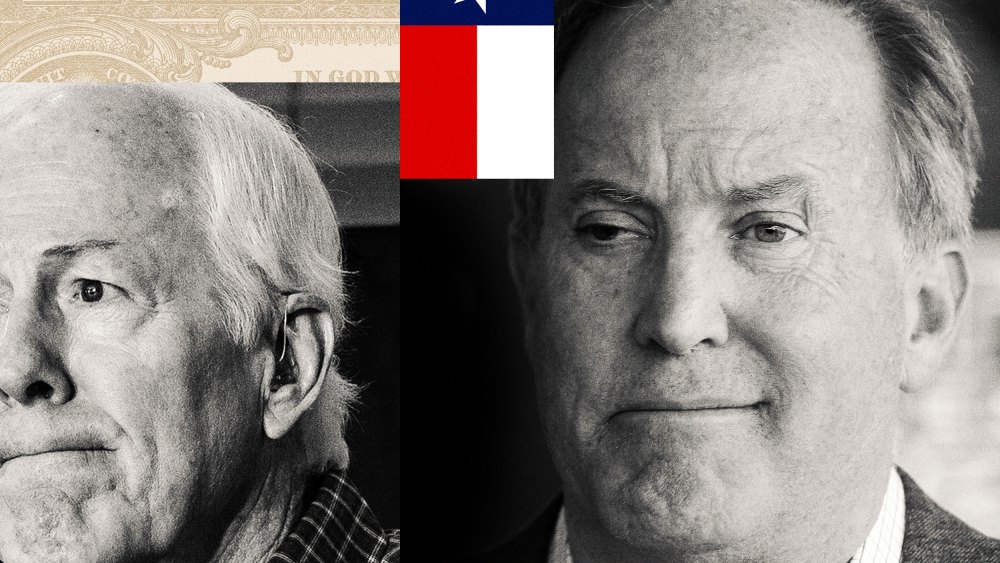
The Texas Republican Senate primary has become one of the most expensive and vicious intra-GOP battles in the country this year — with pro-Cornyn forces placing and reserving at least $69 million on TV ads, according to AdImpact, compared to $4.1 million for allies of his chief rival, Texas Attorney General Ken Paxton. Despite that massive financial advantage, recent polling gives Paxton the edge, with the likeliest outcome of Tuesday’s multicandidate primary being a two-man runoff in May, provided no candidate breaks the 50% threshold on Tuesday.
Follow MS NOW’s midterm elections live blog for the latest updates and analysis on today’s biggest races across Texas, North Carolina and Arkansas.
The contest offers a pointed test of whether the Republican Party’s institutional wing still has the power to defend one of its own against a challenger with extraordinary baggage: securities fraud charges, an impeachment by the GOP-controlled Texas House and a messy public divorce involving allegations of an extramarital affair.
The one thing — the biggest thing — that Paxton has in his favor: backing from the MAGA right.
“John Cornyn — probably a month or two before every election — gets very conservative, and he is not a conservative,” said Clayton, a 69-year-old Dallas Republican who asked to keep his last name private for security reasons. “He’s a RINO,” he said, using the acronym for “Republican in name only.”
The dynamic reflects a fundamental shift in Republican politics, where Trump loyalty has emerged as the paramount credential — more valuable than legislative experience, leadership positions and seniority or an unimpeachable ethical record.
In recent months, the three leading Republican candidates — Cornyn, Paxton and Rep. Wesley Hunt — have intensely vied for Trump’s endorsement. That trio attended Trump’s speech in Corpus Christi, Texas, last week, with Trump telling reporters beforehand that he had “pretty much” decided on who to back — though stopping short of sharing a name with the Texas crowd. He previously gave a half-hearted endorsement to all three candidates.
Cornyn’s central vulnerability stems in part from his ability to work within the legislative system — and even to, on occasion, find common ground with Democrats. After the mass shooting at an elementary school in Uvalde, Texas, he championed a bipartisan gun-safety bill that drew support from then-President Joe Biden — the kind of cross-aisle deal that has become anathema to a Trump-era Republican base that demands constant combat over negotiation.
In 2023 came a bigger apostasy. Days after a civil jury found Trump liable for sexually abusing writer E. Jean Carroll in the 1990s and then defaming her, Cornyn told reporters it was time for Republicans to move past Trump.
“President Trump’s time has passed him by, and I think what’s the most important thing to me is we have a candidate who can actually win,” Cornyn said at the time. “I don’t think President Trump understands that when you run into a general election, you have to appeal to voters beyond your base.”
Cornyn came back around to supporting Trump after his commanding victory in the 2024 GOP presidential primary, embracing the former president and now running ads touting his record of voting with Trump since his return to office.
“Senator Cornyn hasn’t been on the ballot in five years,” said Matt Mackowiak, a senior adviser to the Cornyn campaign. “We want to make sure every voter knows about his record of voting with President Trump 99.3% of the time he’s been in office and his record of conservative legislative victories for Texas.“
But for many Republican voters, the damage was done.
Historically, incumbency has been nearly bulletproof in Senate GOP primaries. Nationally, the last sitting Republican senator to lose a primary was in 2012: Indiana’s Richard Lugar. But the Trump era has rewritten those rules, prioritizing loyalty to Trump over experience and institutional standing.
“Cornyn has been in government for a long time, and we need fresh blood in there,” said Samuel Leos, a 48-year-old Republican voter. “That’s one of the problems they have in D.C.”
That — the combination of anti-incumbency energy with MAGA pique — is a potent combination the Paxton campaign has eagerly deployed.
“John Cornyn is just like every other career politician who talks tough during election season, but then does the exact opposite in D.C. and betrays Texas by repeatedly pushing gun control and amnesty,” Nick Maddux, a Paxton campaign adviser, told MS NOW.
That sentiment helps explain why Cornyn’s spending blitz — which includes advertising targeting not just Paxton but also Rep. Hunt, who is consistently placing third in GOP primary polls — hasn’t moved the needle. Total GOP primary ad spending is approaching $100 million, according to AdImpact. Combined with the Democratic primary, the overall Senate contest has already generated $125 million in advertising, making it one of the most expensive races in the 2026 midterms.
And yet, Cornyn’s spending doesn’t appear to have cut into Paxton’s persistent polling lead. The final Emerson College Polling/Nexstar Media survey of likely GOP primary voters has Paxton with 40%, Cornyn with 36% and Hunt with 17%. And the poll released last week from the University of Texas’ Texas Politics Project shows 41% of “extremely conservative” voters siding with Paxton, compared to only 27% for Cornyn.
Paxton’s strength among hard-right voters — and his various forms of ethical baggage — has created an unusual dynamic: Some Democratic voters are quietly rooting for him to win the primary, viewing him as more vulnerable in November.
“I want Paxton because I hope he loses,” said Lynn Derman, a 68-year-old voter from Dallas who told MS NOW she’s a registered Republican but supports both of the leading Democratic primary hopefuls Jasmine Crockett and James Talarico. “But if I had to vote for a Republican, it would be Cornyn.”
That Paxton can hold a polling lead while also being viewed as the more beatable general election candidate captures just how surreal the race has become. The contest is a stress test not just for Cornyn, but also for the entire premise of Republican establishment power.
If $70 million can’t insulate a four-term senator from a challenger who’s facing charges and an impeachment, it’s hard to say what institutional advantage means anymore.