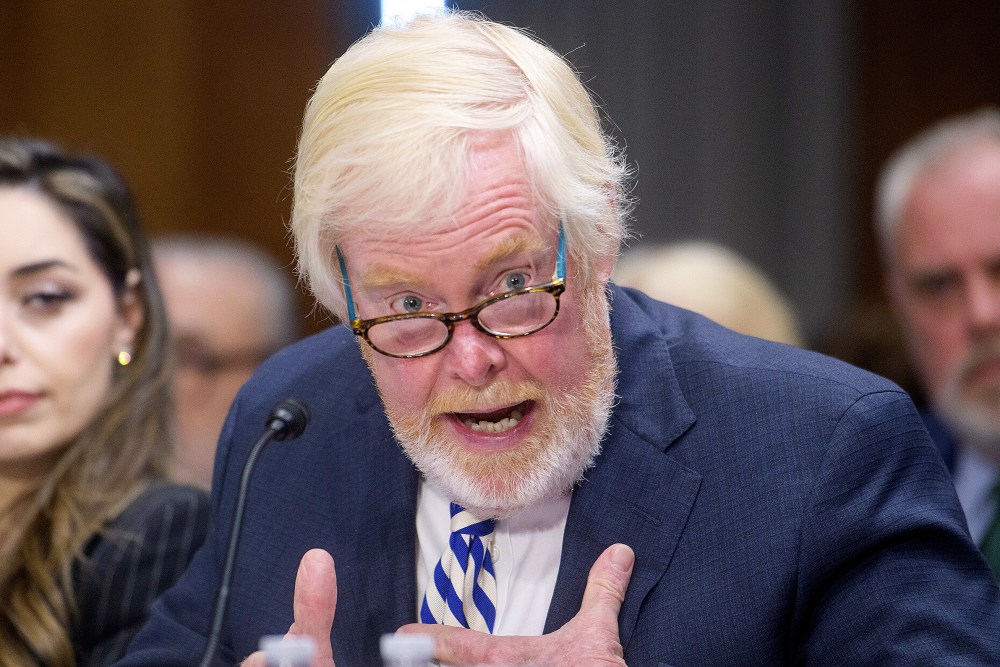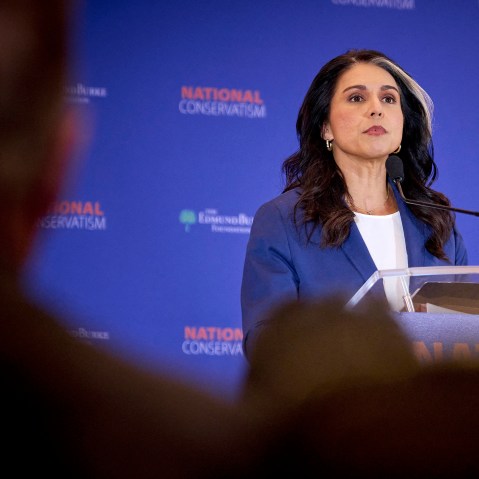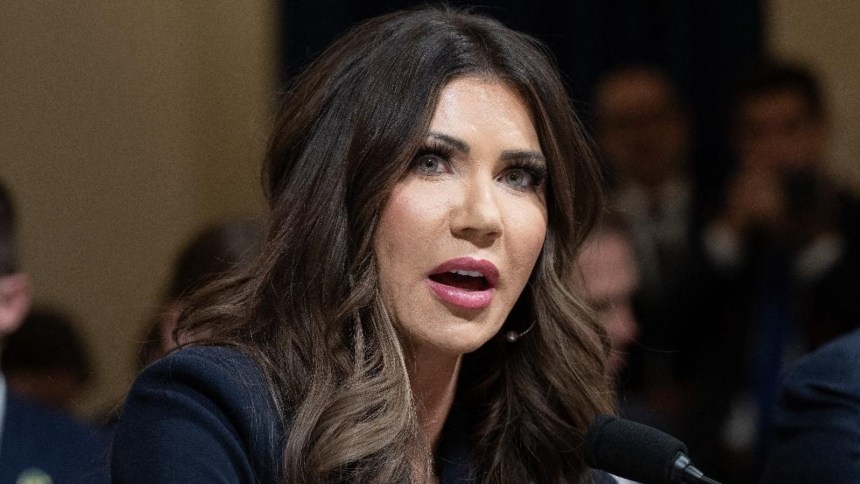
Now former Department of Homeland Security Secretary Kristi Noem agreed under questioning before the Senate Judiciary Committee on Tuesday that the DHS and its components are required to follow federal court orders. That must come as news to the federal judges who have compiled a long list of court rulings Immigration and Customs Enforcement has refused to follow.
ICE’s noncompliance has become so common under the Noem’s leadership that it’s time for all federal judges to factor the agency’s history of defiance into their decisions from the bench. (There is no guarantee that Noem’s replacement, GOP Sen. Markwayne Mullin of Oklahoma, will be any better.)
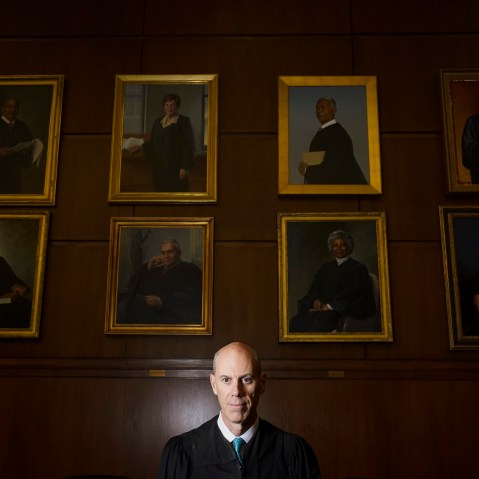
As Noem was testifying on Capitol Hill, another hearing was taking place halfway across the country in Minnesota. After the government missed a deadline to show compliance with a previous order, U.S. District Judge Jeffrey Bryan hauled U.S. Attorney for Minnesota Daniel Rosen and two other officials into a courtroom Tuesday and ordered them to “show cause why they should not be held in civil or criminal contempt.”
There is no more time for warnings and assumptions of good faith from DHS.
Minnesota’s federal courts have continued to be overwhelmed in the aftermath of ICE’s Operation Metro Surge, which flooded the system with hundreds of emergency lawsuits from immigrants detained during the weekslong detention sweeps. But, as my colleague Zeeshan Aleem noted in February, ICE has been defying judicial rulings ordering detainees to be released in multiple ways, to the growing ire of the judges like Bryan who are being stonewalled.
Chief Judge Patrick Schiltz of the U.S. District Court in Minnesota last week blasted the Trump administration for its repeated refusals to follow his court’s orders — or even show up for hearings. In a supplemental order for a habeas corpus case, the judge said that in late January, his court had documented “96 court orders that ICE has violated in 74 cases.” After Rosen, the U.S. attorney for Minnesota, claimed that was untrue, Schlitz ordered his clerks to investigate the matter, and they uncovered an additional 113 orders he said ICE had violated in 77 other cases.

Schlitz wrote that he “is not aware of another occasion in the history of the United States in which a federal court has had to threaten contempt — again and again and again — to force the United States government to comply with court orders.”
Even when judges have forced the release of detainees, some of those detainees have reportedly been denied the immediate return of their belongings. Those belongings have included documentation reflecting their immigration status or citizenship that DHS took during their arrest and detainment. The agency’s refusal to return property to those it has released has also been an act of defiance, leading to Bryan’s admonition of Rosen and his colleagues. (Bryan had not issued a timeline for a decision on holding Rosen and the other officials in contempt as of Wednesday afternoon.)
The Minnesota judges are not alone in their frustration. A New York Times analysis published last week found “at least 35 instances since August in which federal district court or magistrate judges issued an order requiring the government to explain why it should not be similarly punished for violating court orders, essentially giving officials one last chance to explain themselves.”
The admonitions out of Minnesota were relatively calm compared with the stark warning U.S. District Judge Joseph Goodwin of the Southern District of West Virginia issued in an opinion last week. The opinion itself granted a writ of habeas corpus to a man arrested and detained in February, demanding that the petitioner be released from detention immediately. It was one of 17 similar petitions assigned to the federal court last week, the opinion notes, most of them for arrests after multiple rulings in the district found DHS’ policy of mandatory detention for noncitizens was unconstitutional.
Goodwin, an appointee of Bill Clinton, noted with undisguised irritation that when called out on the ongoing violations of those rulings, government lawyers didn’t bother to change their arguments or indicate they would change. “Constitutional rulings of federal district courts are not advisory opinions,” he wrote. “This court will not permit constitutional violations to proceed piecemeal while officials await appellate reversal of rulings they are presently bound to obey.”
Goodwin then made clear the consequences for anyone continuing to pretend that district court orders are merely suggestions:
This Memorandum Opinion and Order serves as explicit notice to all officials — state and federal — involved in the detention of individuals whose cases come before this court. Continued detention without individualized custody determinations, after this court’s repeated holdings that such detention violates the Fifth Amendment, will result in legal consequences. For state jail officials, those consequences include personal civil liability without qualified immunity protection. For federal officials, those consequences include exercise of this court’s full inherent authority to enforce constitutional compliance including contempt.
Officials who believe this court has erred in its constitutional analysis may seek stay of this court’s orders pending appeal or pursue appellate review. What they may not do is continue systematic constitutional violations while preserving appellate objections and expecting this court to grant relief in case after case without enforcing its rulings.
This court will enforce the Constitution.
The tone and tenor from Goodwin are appropriate, as is his warning that state officials may also bear some of the brunt of the federal government’s defiance. Considering that defiance, as one federal judge recently wrote, there can no longer be “a presumption of regularity” from federal courts toward this administration’s intentions or claimed purposes. Rather than offering the benefit of the doubt to government lawyers when orders are defied, the presumption moving forward must be one of irregularity.
There is no more time for warnings and assumptions of good faith from DHS. Each act of noncompliance must then be added to a swiftly increasing grand total of lawlessness. Federal judges must also begin doling out penalties to government officials who defy them. Those who experience those consequences must include Noem and the others who are ultimately responsible for these unconstitutional polices, lest they be spared and their subordinates be the only ones punished for following their orders.