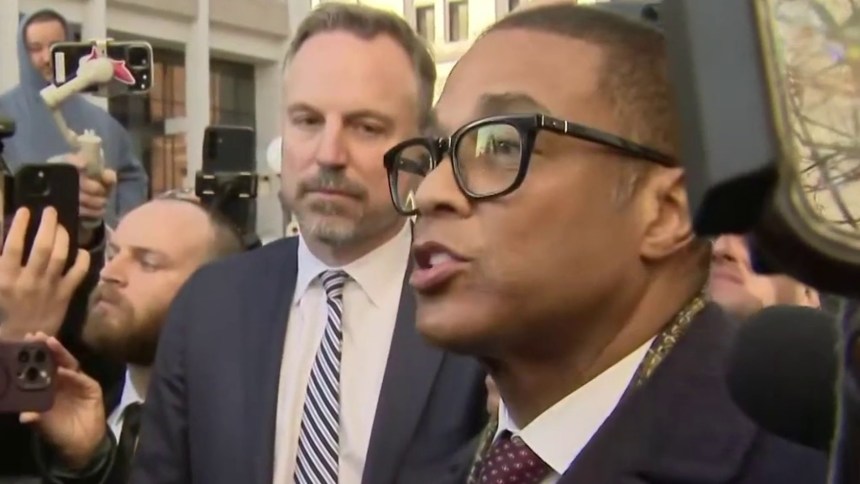
The indictment of journalists Don Lemon, Georgia Fort and others in Minnesota stands out during a time when grand juries nationwide have rejected some of the Trump administration’s most politicized prosecutions.
Even still, might the case have only cleared the low bar of probable cause due to government misconduct in the grand jury?
A motion from Lemon and Fort raises that bold claim in seeking disclosure of the secret grand jury proceedings against them. Their court filing underscores that there’s no good reason to presume good faith on the government’s part in President Donald Trump’s second term — and that there’s good reason to presume the opposite.
“The extraordinary set of events that led to this indictment reveals a significant risk that the government misstated key facts or elements of the offenses charged during its presentation to the grand jury, as it has already done so publicly, calling into question the validity of the indictment,” the motion argued. It said Lemon and Fort were indicted after attending a church protest “solely in their capacities as members of the press” and that they were charged only after courts rejected warrants for their arrest, Trump pressured the Justice Department and career prosecutors refused to be involved.
Maintaining that their concerns about government misconduct aren’t “abstract or speculative,” the defendants pointed to what they called “a small but growing body of caselaw involving the precise situation we see here — the government engaging in highly unusual conduct simultaneous to political pressure to bring charges, and misstatements of law at the highest levels of government.”
Specifically, they cited a ruling in the since-dismissed prosecution of former FBI Director James Comey, in which a federal judge in Virginia granted the same relief Lemon and Fort are seeking in Minnesota.
“The court’s reasoning in Comey applies with equal force to Mr. Lemon and Ms. Fort,” their motion argued. “As that court concluded, when the government may have misstated the law to the grand jury and thereby allowed corruption of the probable-cause assessment, the defense is entitled to examine what was said and how the law was presented. So too here.”
More broadly, they argued that the administration isn’t entitled to the “presumption of regularity,” a legal concept that assumes government officials act properly. It’s worth questioning the presumption as a general matter but especially in this administration, whose atypical actions have drawn atypical scrutiny from judges, including in other recent cases in Minnesota.
“In light of the foregoing, the grand jury process in question here is not entitled to any presumption of regularity by the Court. Likewise, it should not be afforded the traditional secrecy that accompanies grand juries operating in the normal course,” Lemon and Fort argued in their motion, filed Friday.
They were charged with conspiring against the right of religious freedom at a place of worship and with injuring, intimidating and interfering with the exercise of the right of religious freedom at a place of worship. They have pleaded not guilty.
The DOJ will have an opportunity to respond to the motion. But due to the Trump government’s behavior over the past year, it may be going into this case with a disadvantage — or, perhaps more precisely, without the advantage it would have in normal times. Although if we were in normal times, this case might not exist.
Subscribe to the Deadline: Legal Newsletter for expert analysis on the top legal stories of the week, including updates from the Supreme Court and developments in the Trump administration’s legal cases.