Given the lack of action on a Department of Homeland Security funding bill, lawmakers are almost certain DHS is headed for a shutdown this weekend. The real suspense is how long the shutdown will last — and the severity of it.
Many congressional Democrats, demanding changes to immigration enforcement agencies after federal agents shot and killed Renee Good and Alex Pretti in Minnesota, are opposed to a stopgap funding bill for DHS. Instead, they want a deal on policy changes in the immediate future.
“We need to resolve this,” Rep. Rosa DeLauro, D-Conn., told MS NOW on Wednesday. “We keep just kicking the can down the road.”
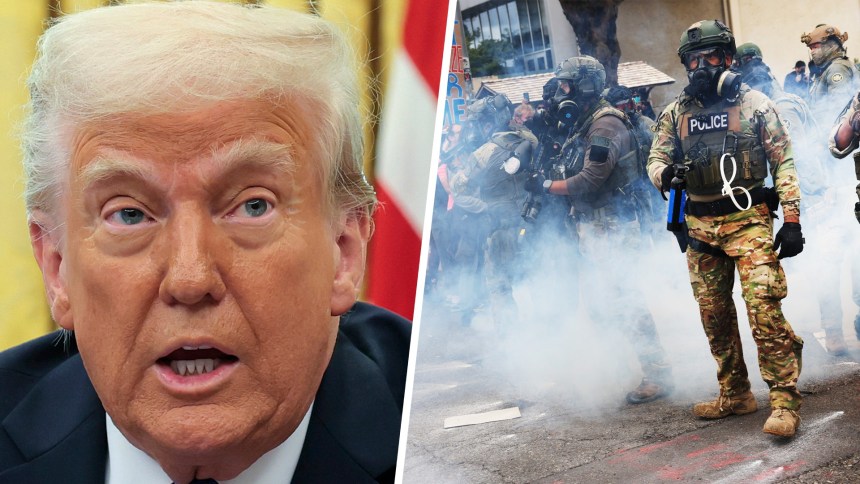
Republicans want a short-term funding measure to buy more time. But that would take unanimous agreements in the Senate to pass something by Friday night’s midnight deadline.
Still, a shutdown at DHS wouldn’t carry the same effects as other funding lapses. For one, a DHS shutdown would only affect about 4% of discretionary government spending. And for another, DHS has money to mitigate much of the shortfall.
Immigration and Customs Enforcement got $75 billion in extra funds in last year’s Republican tax-and-spending law, much of which could keep operations at ICE running. Some of those funds helped cover paychecks during last year’s shutdown in October and November. Customs and Border Protection also received $65 billion in last year’s law.
Of course, some agencies could be left in a lurch, including the Transportation Security Administration, the Coast Guard, Federal Emergency Management Agency, Secret Service and the Cybersecurity and Infrastructure Security Agency.
If the shutdown lasts two weeks, employees at those agencies will notice a difference in their paychecks. DHS employees are set to receive a paycheck by Feb. 26 that covers work performed from Feb. 8 through Feb. 21. Almost half that time would be during a shutdown, meaning the Feb. 26 paycheck would be lopped in half, until employees get back pay at the end of the shutdown.
In the short term, much of the work at DHS would continue. More than 90% of the department’s 272,000 employees are considered “excepted” and would continue working during a shutdown, according to the latest guidance published in September.
Leaders of some of the affected agencies urged lawmakers Wednesday to avert a shutdown.
Ha Nguyen McNeill, TSA’s acting administrator, told members of a House Appropriations subcommittee that the rate of unscheduled absences almost doubled toward the end of last year’s shutdown.
“The mental and emotional toll that it takes on our workforce cannot be understated,” McNeill said. “We saw a lot of folks have to take on second jobs, making for extremely long workdays.”
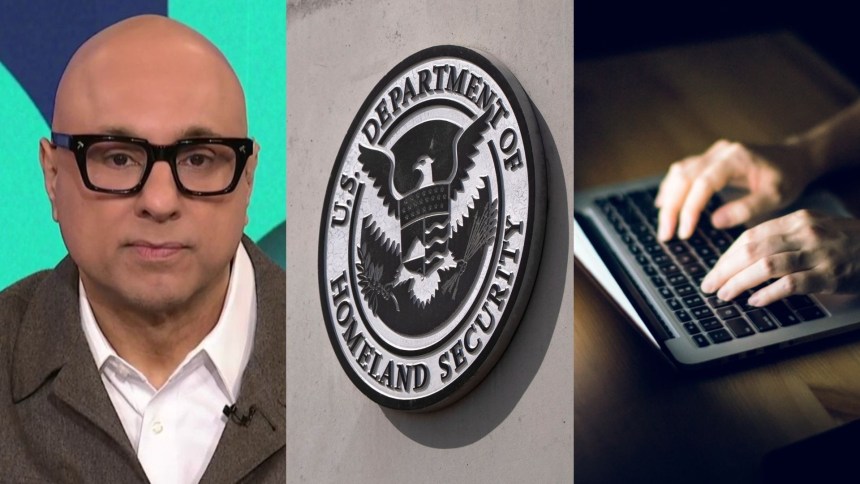
DeLauro introduced a bill to fund all of DHS except ICE, CBP and secretary Kristi Noem’s office. She slammed Republicans for shedding “crocodile tears” for agencies that would be affected by the shutdown, saying Democrats are willing to fund.
“They want to defend ICE, then go ahead and defend ICE and hurt everybody else,” DeLauro told MS NOW.
In an interview with MS NOW, House Minority Leader Hakeem Jeffries, D-N.Y., echoed DeLauro’s sentiment on avoiding a partial shutdown, saying either Republicans make “dramatic” reforms at the agency or be responsible for the funding lapse.
While Democrats have largely been unified around a funding negotiation strategy, Friday’s deadline presents another test for party leaders. Some centrists are interested in supporting a stopgap funding measure. For example, Rep. Henry Cuellar, D-Texas, told MS NOW on Wednesday that he would be fine with a short-term stopgap, and said he talked to DeLauro about making sure her bill is not a “defund ICE” measure.
“She’s not talking about defunding,” Cuellar said. “You know, I asked her that. There’s no defunding — just saying, ‘Let’s keep the conversation going.’”
Republicans say negotiations on changes at DHS have been positive. So far, Republicans have pushed, mostly unsuccessfully, for Democrats to support a stopgap measure so lawmakers can continue talks.
The House voted Wednesday to make it easier to bring a DHS continuing resolution to the floor, setting up a speedy vote if a bill comes to the lower chamber.
On Saturday, Democrats sent Republicans an offer on DHS changes, seeking an end to roving patrols, a requirement for judicial warrants, required use of body cameras and a ban on masks, among other measures.
On Monday, Democrats rejected a counteroffer from the White House, which Senate Minority Leader Chuck Schumer, D-N.Y., said was “incomplete and insufficient.”
In line with his counterpart in the upper chamber, Jeffries claimed the White House’s proposal wasn’t even clear on body cameras — a request that Noem has said they would mandate once funding is available on all DHS law enforcement.
“The White House has not even gone as far as saying, ‘We agree, mandatory body cameras, no exceptions,’” Jeffries told MS NOW on Tuesday. “Their response, even in that area, has been ambiguous.”

Senate Majority Leader John Thune, R-S.D., and other Republicans have said there’s been enough progress in negotiations to merit a short-term stopgap.
“It’s a work in progress, but I would hope that the Democrats here in the Senate, if it takes more time, which I believe it will, would be amenable to allowing us to get an extension of the continuing resolution,” Thune told reporters Tuesday.
Sen. Katie Britt, R-Ala., the Senate GOP point person in negotiations, said Tuesday that Republicans were working on the specific text of a counterproposal.
“If you think about the amount of time it took them to get their list out, and then how long it took them to get text, obviously the counterproposal, we’ll be working on text,” Britt told MS NOW.
House Republicans have echoed that, saying they’d support a measure to keep DHS running.
“I’d certainly support it,” House Appropriations Chairman Tom Cole, R-Okla., told reporters Monday. “I don’t want to shut the government down.”
Mychael Schnell contributed to this report.