The first images of the fire damage hit me hard. Seeing Beth Israel’s library reduced to ashes and the mounted tree of life plaques in the foyer destroyed was hard to accept. Even harder to take was the announcement from officials that this was no accidental electrical fire, but rather the work of an arsonist who targeted the only building that houses Jackson, Mississippi’s small Jewish community.
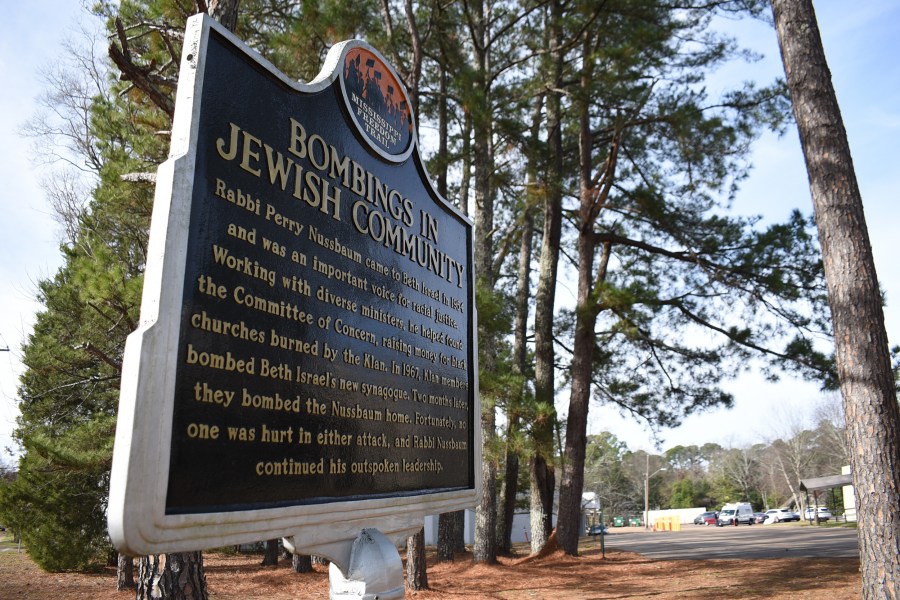
The images reminded me of the black-and-white photos of damage to the same part of the same building after the Ku Klux Klan left a bomb that ripped through the back of the synagogue in 1967. The bomb was the Klan’s response to Rabbi Perry Nussbaum’s outspoken support for civil rights. A few years ago, we dedicated a Mississippi Freedom Trail marker telling this dark history in front of the synagogue .
Seeing Beth Israel’s library reduced to ashes was hard to accept.
And now, history is repeating itself.
While the images almost 60 years apart from each other are powerful, I will remain focused on another picture: a photo of one of the congregation’s surviving Torah scrolls, completely unspooled on long tables at Northminster Baptist Church, airing out from the smoke damage caused by the fire. Beth Israel has had a close relationship with Northminster for decades; the fledgling church met at Beth Israel’s old synagogue in 1967 after breaking away from a larger Baptist church in Jackson that refused to integrate. After Saturday’s fire, Northminster offered Beth Israel’s Torahs a place of sanctuary. The church will also be hosting the congregation Friday night for the first Shabbat services after the fire.
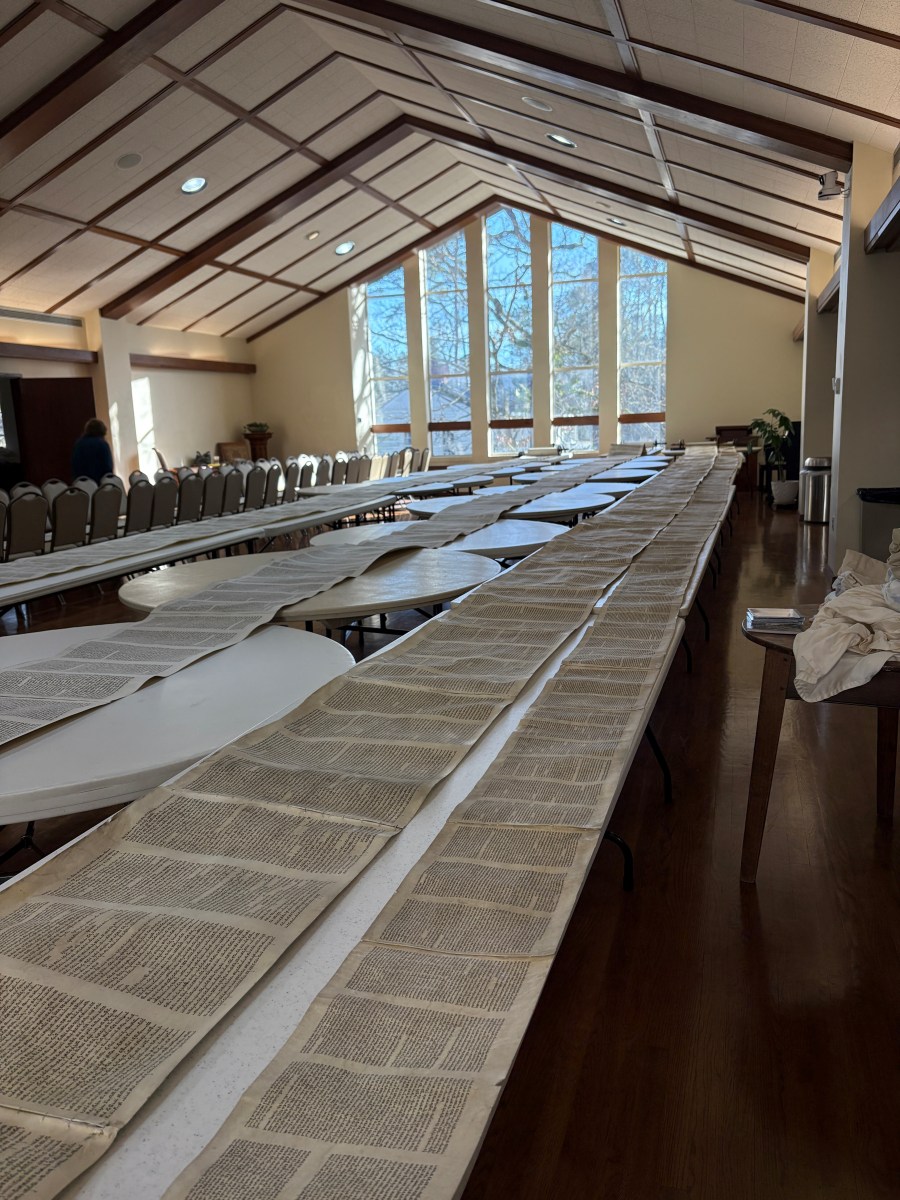
Courtesy Beth Israel Congregation
Beth Israel’s partnership with Northminster and the many offers of support it has received from churches and organizations across Jackson better reflect the Jewish experience in Mississippi than the damage caused by a hooded arsonist. Since Jews established communities and congregations in the 19th century, they have been accepted into the religious mainstream of Mississippi. When Jews were dedicating the state’s first synagogues in the late 19th century, Christian ministers and elected officials participated in the ceremonies.
When Natchez’s synagogue accidentally burned down in 1903, the congregation met at Trinity Episcopal Church, First Presbyterian Church and Jefferson Street United Methodist Church until a new temple was completed. In 2005, after Hurricane Katrina severely damaged the Mississippi Gulf Coast’s only synagogue, the Jewish congregation met at Beauvoir United Methodist Church in Biloxi.
When Beth Israel’s current synagogue was dedicated in 1967, a few months before the Klan bombed it, Christian ministers from across the city, including the leader of Mt. Helm Baptist Church, the city’s oldest Black house of worship, participated in that dedication. The silver mezuzahs that still grace the front of the building were gifts of the Catholic and Episcopal dioceses. Indeed, when the congregation launched the campaign to build our current synagogue, one of the rationales included in the fundraising appeal was the need for a larger building to accommodate the “church groups that visit us regularly.” Beth Israel’s synagogue is prominently located on Old Canton Road, nestled between numerous other churches. It is a visible and vital part of Jackson’s religious community.
While the bombing and burning of Beth Israel Congregation may be the exception more than the rule, these attacks can teach us something about our history and the challenges we face today. When one looks at the major outbreaks of antisemitism in Mississippi, it’s clear that they correspond to periods of social and political turmoil. In the early 1890s, as Jim Crow and white supremacy were being written into Mississippi law and practice, an underground group of racial terrorists known as “whitecappers” targeted Jewish landowners and their Black renters. It was during the civil rights era, when federal power forced white Mississippians to abandon Jim Crow, that the most extreme and violent supporters of segregation bombed synagogues in Jackson and Meridian, and the home of Rabbi Nussbaum.
Perhaps the recent attack on Beth Israel indicates that we are in another such time. The 19-year-old man that officials accuse of setting the fire reportedly admitted that he targeted Beth Israel and said he did so because it was a Jewish institution. He reportedly called it a “synagogue of Satan.” We need to learn more about how he developed these twisted ideas. What was he reading? What was he watching? We’re now in a time when some people are claiming that certain citizens are superior, that they’re “heritage Americans,” and that people from other countries or faiths threaten the United States. We’ve just seen the kind of violence that can result from such rhetoric.
In 1967, three days after Beth Israel was bombed, an interracial group of ministers marched down Old Canton Road to the temple as a show of sorrow and support. They called it the “Walk of Penance” to apologize for the environment of hatred that had resulted in so many church burnings during the civil rights era, most of which targeted Black churches. The images of those ministers is what most sticks with me when I think about the 1967 attack. As we process and recover from this new attack, I’m just as sure that it’s those similar images of community support and unity that will linger the longest.