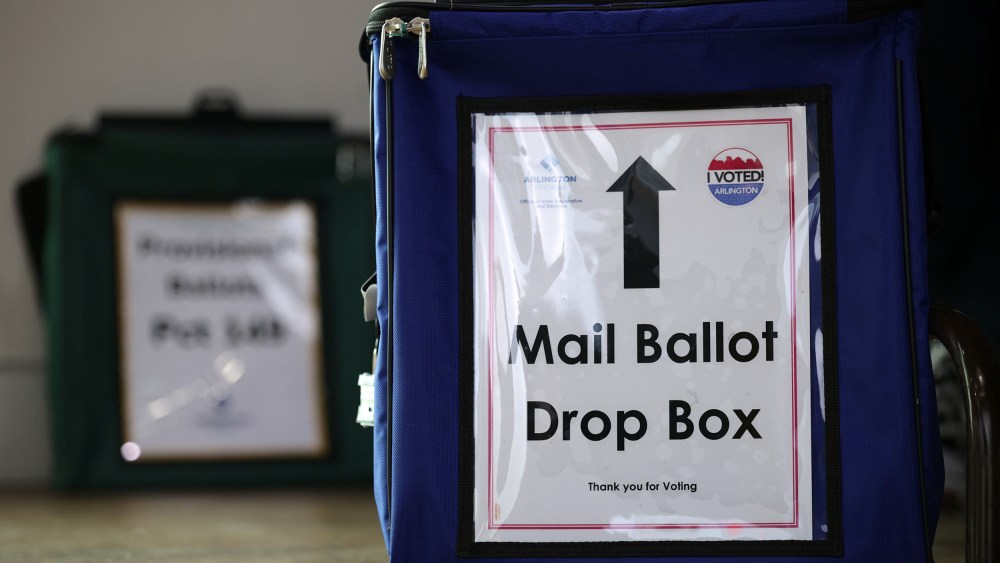
If you plan to vote by mail next year, you should plan to get your ballot in even earlier than usual.
That’s because a recent U.S. Postal Service policy change that affects how and when postmarks are applied could lead to some ballots being thrown out even if they were mailed on time.
To the extent that any of us thinks about postmarks — which is probably not much — we probably picture a postal clerk at a counter tapping that round rubber stamp on the upper-right corner of an envelope.
But these days, about the only people who get their mail postmarked by hand are couples sending out fancy wedding invitations. Most mail is postmarked by machine as it’s processed.
A recent Postal Service policy change that took effect this week ended the seven-decade policy of postmarks reflecting when an item is considered mailed. Now, the postmark could mean not when the Postal Service first took possession of an item but the day that that piece of mail was first received at a processing facility.
That means if you drop your ballot in a blue USPS box on Election Day — or your tax return on April 15, for that matter — it may get a postmark of the next day.
(A quick piece of advice: If you are sending in your ballot on Election Day, take it to the counter and ask for it to be manually stamped or use a ballot drop box, if you have them in your area.)
In a normal world, this postal change would not be a big deal, but the Republican Party has attempted in several recent elections to get ballots thrown out because of issues with postmarks. In Wisconsin in September 2020, a judge ruled that late-arriving ballots should be counted as long as they had been postmarked by Election Day. An appeals court later suspended the extension, and just days before the election, the Supreme Court declined to reinstate it.
Similar fights over postmarks on ballots have also happened in Pennsylvania and Nevada.
Sixteen states and the District of Columbia currently allow mail-in ballots that have been postmarked by Election Day to be counted as long as they arrive within a certain grace period, typically a couple of days after the election. Twenty-nine other states have similar grace periods that are limited to military and overseas voters.
Those grace periods may soon end, however. The Supreme Court announced in November that it will hear a case first brought by the Mississippi Republican Party, the Republican National Committee and two Mississippi voters. The Fifth Circuit Court of Appeals — widely considered the most conservative circuit in the country — already ruled in their favor, arguing that grace periods violate a federal law requiring a “single Election Day.”
This fight puts legalistic parsing of voting law above the basic rights of voters to have their ballots counted and above common sense.
A voter who does everything right casting a mail-in ballot has no way to ensure that the Postal Service will give it the correct postmark or even promptly deliver it — especially if they are sending it from another country or a military base overseas. (Do you even know if you live within 50 miles of a USPS regional processing center?) Throwing out those voters’ ballots is punishing them for someone else’s conduct.
The change in postmarks — or even a Supreme Court decision ending grace periods — would particularly hurt voters with disabilities, senior citizens, expatriates living overseas, active-duty service members and people living in rural areas that are farther away from USPS processing facilities.
While Democrats continue to vote by mail at greater rates than Republicans, these particular groups of mail-in voters aren’t necessarily Democrats. Voters with disabilities are a classic swing group, while data from the Pew Research Center shows seniors, members of the military and rural residents are Republican-leaning demographics. (Expatriates are thought to lean Democratic, but they are the smallest of these groups.)
In other words, Republicans who fight to throw out those late-arriving ballots may end up hurting their own voters.