





The Dilley Immigration Processing Center in South Texas houses the largest population of children in federal custody. In recent weeks, reports have emerged of disease outbreaks and unsanitary conditions inside the facility.
Elora Mukherjee, director of the Immigrants’ Rights Clinic at Columbia Law School, represents several former and current detainees at Dilley. She joined Jen Psaki on Tuesday and told MS NOW that children, some as young as 1 year old, have been held for prolonged periods of time at the center, in violation of U.S. law.
“Children should not be detained any longer than 20 days, but the Trump administration is regularly holding children in detention for far longer periods,” she said. “I’m currently representing three children who’ve been in detention for nearly 140 days, about seven times the lawful limit.”
Mukherjee also described conditions inside the facility. “Lights are on 24/7, which means children and families have a very difficult time sleeping,” she said.
Along with inadequate access to medical care, families have reported that water is in short supply. “Parents are forgoing water and using their limited funds to buy bottles of water for children, so that their children have enough to drink,” Mukherjee said.
Access to nutritious food has also been an issue. “Children and parents alike have told me how they found worms, bugs and mold in their food,” Mukherjee told Psaki.
“Life inside Dilley is extremely difficult,” she said. “It is a prison for children, for toddlers, for babies.”
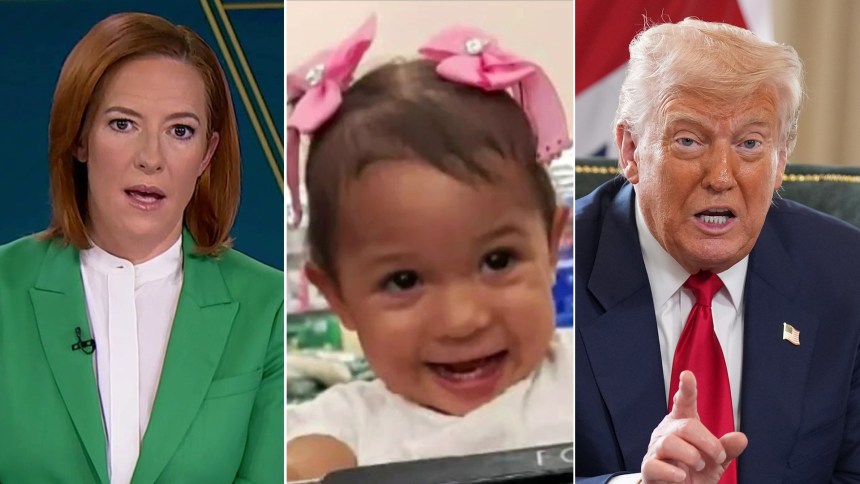
Mukherjee talked about how detention had harmed the health of one of her clients, a toddler named Amalia. Before entering the custody of Immigration and Customs Enforcement, the 18-month-old was healthy; after just one month at Dilley, she was rushed to the hospital with life-threatening respiratory failure.
After receiving treatment, Amalia was sent back to the facility, where her lawyers say she was denied access to the medication doctors had prescribed. (The Department of Homeland Security has denied that any medication was withheld.)
“ICE officials should never have returned her to the Dilley facility, where she was exposed to many viruses,” Mukherjee said.
Amalia was later released from custody, only after her lawyers filed an emergency habeas corpus petition in federal court.
“Luckily, she is now safe. She is recovering, and her and her family are doing better,” Mukherjee said. “But the trauma of this experience will be with them for a lifetime.”
You can watch Psaki’s full interview with Mukherjee in the clip at the top of the page.

Allison Detzel is an editor/producer for MS NOW. She was previously a segment producer for “AYMAN” and “The Mehdi Hasan Show.”