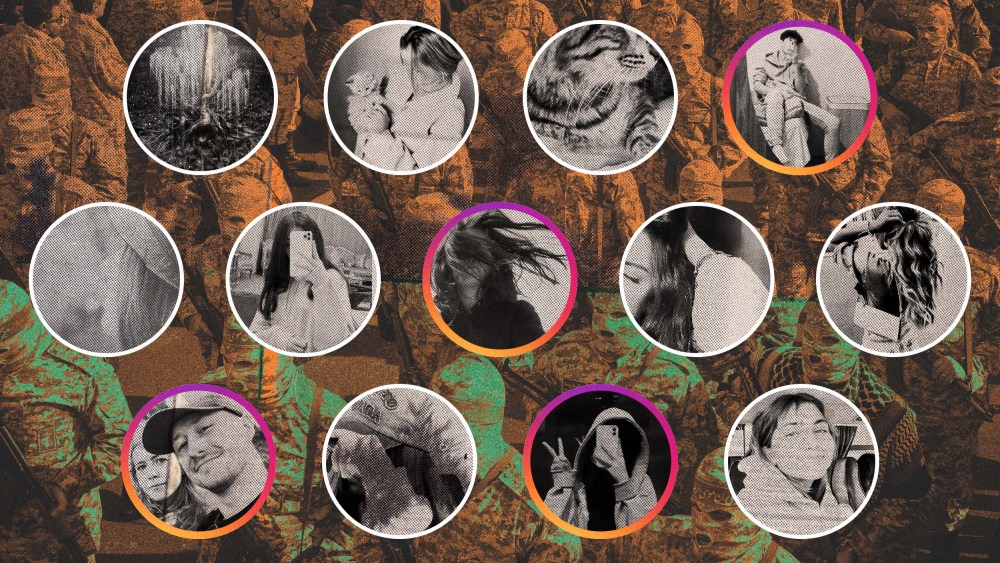
A network of fake social media accounts linked to Iran’s Islamic Revolutionary Guard Corps has been seeding pro-Tehran propaganda across X, Instagram and Bluesky amid the U.S.-Israeli-led war. The accounts — masquerading as Scottish independence supporters, Irish nationalists and Latina women — posted divisive content geared toward local audiences until late February, when they all pivoted to the war in Iran, according to a new report from Clemson University’s Media Forensics Hub shared with MS NOW.
The report identifies 62 accounts across three platforms that filtered Iran’s messaging through two types of fake users: Spanish-language profiles claiming to be Latina women from Texas, California, Venezuela and Chile, and English-language profiles pretending to be from Scotland, England and Ireland.
None of the users are who they purport to be, and they post behind stolen or artificial intelligence-generated profile pictures, the researchers said.
“These accounts are trolls, in the 2016 Russian sense of the word, trying to appear to be real people, in order to integrate into very specific communities and influence those communities online,” said Darren Linvill, who co-leads the Media Forensics Hub at Clemson University.
Before the war, the accounts focused on contentious geopolitical topics central to their fake identities: British accounts were anti-Labour Party, anti-union, anti-Keir Starmer and anti-royal. Scottish accounts called for Scottish independence, while Irish accounts posted reunification messages. The Latina accounts railed against U.S. Immigration and Customs Enforcement, and rallied support for ousted Venezuelan President Nicolás Maduro.
One X account, which has since been suspended, depicted a woman with the username Ana Rodri, purportedly from California. Her profile photo showed a woman with her back to the camera, touching her long brown hair. Her Spanish bio, according to a translation by X’s AI Grok, reads, “Daughter of migrants, dreamer and resilient | I fight against discrimination and imperialism.”
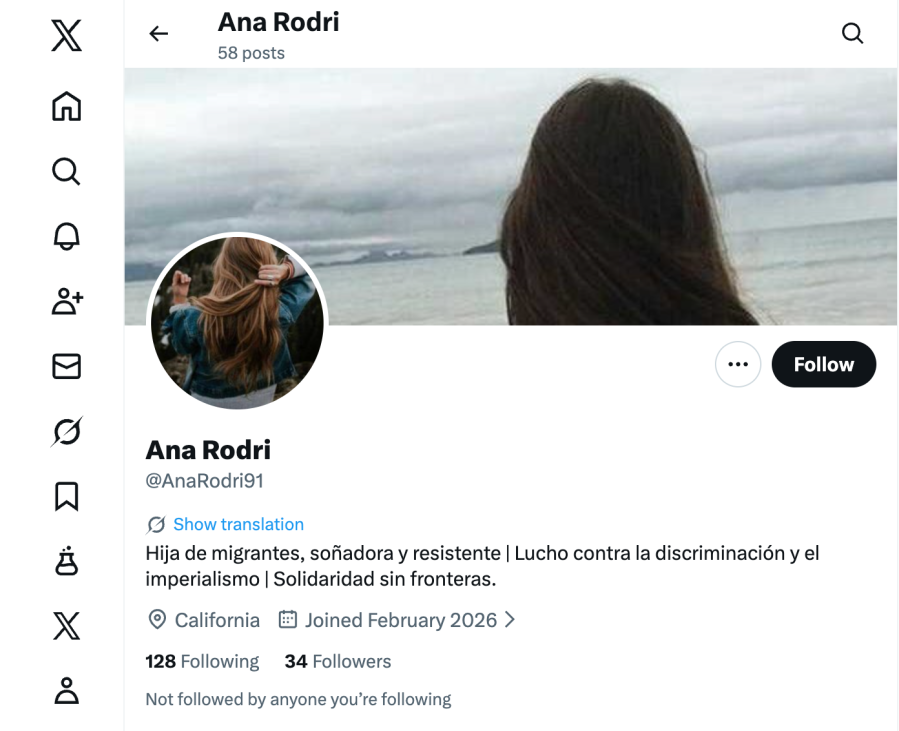
In early February, the Rodri account posted various images of ICE protests with messages like “Resistance is our only option when Justice fails,” according to the Clemson report. After the U.S. and Israel launched joint airstrikes in Iran on Feb. 28, Rodri — along with the other fake users in Iran’s campaign — began posting about the war. Rodri published videos from anti-war protests outside Trump Tower, anti-American and anti-Israel political cartoons and videos of an American pilot who had been mistakenly shot down by Kuwaiti air defenses.
Like Rodri, the majority of Iran’s manufactured personas were presented as women.
“In the trolling business, there’s a long history of stealing women’s identities and purporting to be women in order to get more engagement,” Linvill said. “They tend to make much more authentic voices, and disinformation operations rely on that.”
Other accounts posted about civilian casualties (particularly children killed in airstrikes), criticized President Donald Trump and Israeli Prime Minister Benjamin Netanyahu, and promoted footage purportedly showing Iranian missile strikes on U.S. and Israeli targets. Several accounts mourned former Supreme Leader Ali Khamenei — killed in an Israeli missile strike — as a martyr.
Some of the content included AI-generated fakes and misrepresented footage. One of the Scottish accounts posted an AI-generated image of damage to a U.S. military base in the Middle East. Another account posted a video of an explosion, falsely described as a drone strike on a U.S. Embassy; it was actually footage of a car accident on a Saudi Arabian freeway, originally posted weeks earlier.
Researchers identified nine Instagram accounts and five Bluesky accounts pretending to be real people from Scotland. On Tuesday, one of the Instagram accounts using the name Freya Maguire (bio: “Life on my own terms!”) posted an AI-fabricated video showing Trump and Netanyahu, wide-eyed, arguing over the ascension of Iran’s new supreme leader, Mojtaba Khamenei.
As of March 9, most of the accounts on X claiming American ties had been suspended. The users purporting to be from Scotland, Ireland and England were mostly still active. Reached for comment by MS NOW, a Bluesky representative said the accounts on that platform mentioned in the Clemson report had been taken down. Representatives for X and Instagram didn’t immediately respond to calls for comment.
Linvill said Iran’s goals with its propaganda campaign were clear.
“Iran redirected its resources toward propaganda around the war, trying to make the war more painful for the United States,” he said. “Clearly with the hope of shortening it.”
Iran’s history of influence operations targeting the U.S. is well documented. Iran has been active in U.S. elections since at least 2016, when Iranian hackers targeted Trump’s campaign and trolls impersonated political candidates online. Intelligence officials, researchers and journalists have repeatedly revealed Iran’s clandestine attempts to spread disinformation and sow discord online, and social media companies regularly remove Revolutionary Guard-linked networks from their platforms.
Clemson researchers linked the Guard’s latest disinformation campaign to a similar operation in 2024, when an Iranian network promoted Scottish independence narratives online. The current campaign reaches a wider audience on more platforms and targets more individual communities, the researchers said.
“They have identified pain points within communities of their geopolitical rivals, and they’re pushing those pain points,” Linvill said.
Despite the coordinated behavior, the researchers note these fake accounts seem to be operated by real people and are neither written by AI nor automated. The posts often steal content from other, more high-profile creators and include typos and other mistakes.
The overall reach of the campaign, while not viral by any individual metric, adds up.
Ella Murray, a research analyst at Clemson who conducted much of the network analysis, said the posts likely reached tens of millions of users. While individual posts showed modest engagement — sometimes dozens of views and few comments or reposts — Murray cautioned that the network is likely larger than what researchers have so far identified.
“We think there are more accounts out there,” Murray said. “We just haven’t had any luck finding them yet.”