
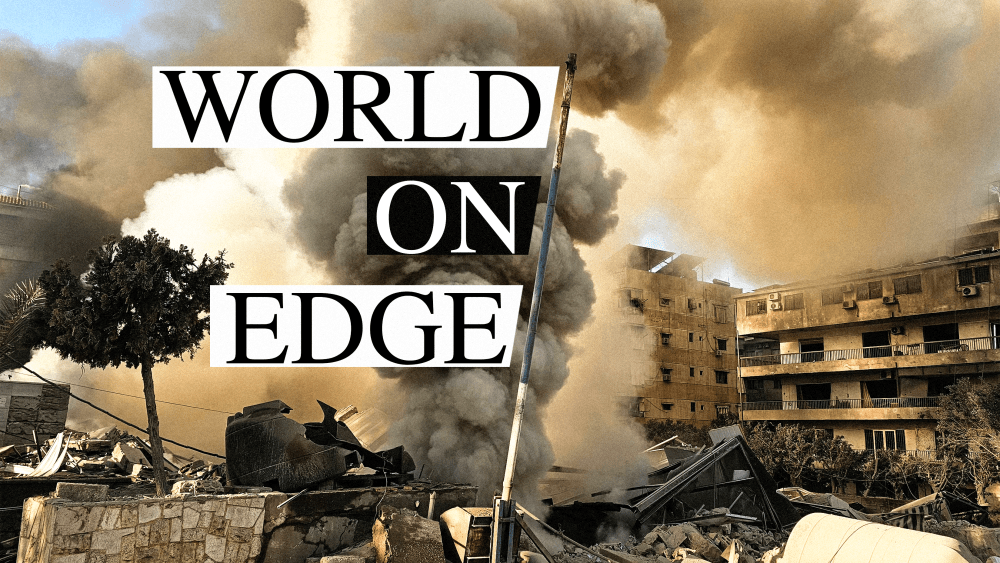
This is the March 3, 2026, edition of “The Tea, Spilled by Morning Joe” newsletter. Subscribe here to get it delivered straight to your inbox Monday through Friday.
“Given what’s in the files, and given past conduct, he would be on my witness list.”
— Former Secretary of State Hillary Clinton, when asked if President Donald Trump should be deposed by Congress regarding the Jeffrey Epstein files
REPORTER’S NOTEBOOK: DAVID IGNATIUS
JS: The Iranian regime has been in power since 1979, and they have the infrastructure to fight for quite some time. What is your latest reporting on where this conflict stands and how long it may last?
David Ignatius: This is a longer, wider war than I think anybody expected, in part because the Iranians are not suing for peace. They don’t want to talk. The Trump administration’s “Viking strategy” is meeting stiff resistance.
This morning, I received a message from the UAE describing the situation there. It’s a global hub that basically has been shut down. Air traffic in and out has been almost impossible at a time when people are being urged — in some cases ordered — to leave. There’s real confusion across the [Persian] Gulf as people reckon with the fact that this could go on for a month or more.
The economic impacts of the war are becoming clearer. The Strait of Hormuz has been effectively shut down, so transiting oil out is going to be difficult. Oil facilities in Qatar and Saudi Arabia have been hit. The length and cost of the war is clearer today than it was 24 hours ago.
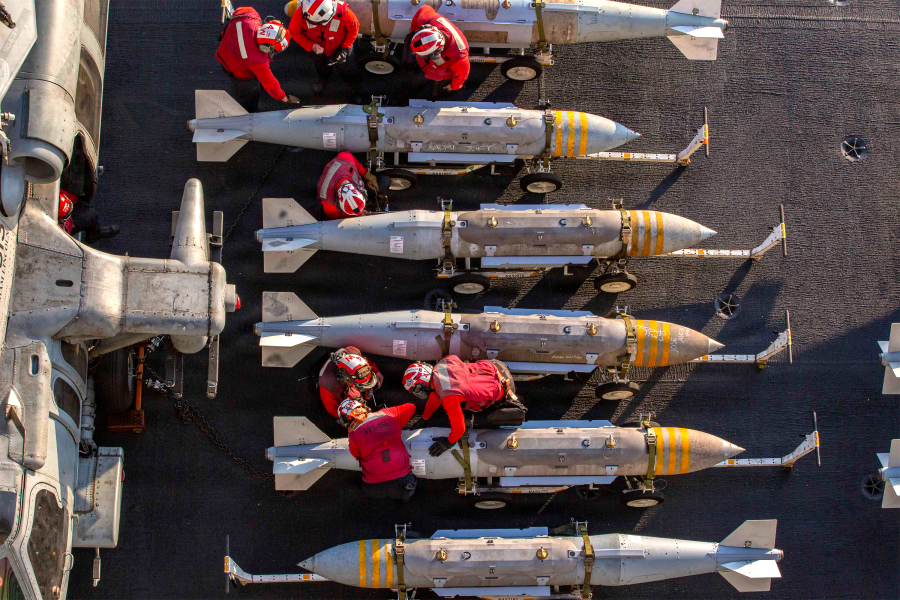
In an overhead image provided by the U.S. Navy, U.S. sailors prepare ordinance from the flight deck of the USS Abraham Lincoln in support of Operation Epic Fury.
JS: Iran is a mountainous, spread out, extraordinarily difficult place to go into. What do you make of comments from Pete Hegseth and others about possible boots on the ground?
DI: An invasion of Iran is hard to imagine. No U.S. commander in his right mind would try that. I could see limited special forces operations in various parts, but a full ground campaign in Iran would be extraordinarily difficult.
JS: You and I have talked about the danger of looking at Iran as another Venezuela. What’s different?
DI: The people running Iran see themselves as revolutionaries. Since 1979, they’ve viewed the United States as their great adversary. The war that we’ve predicted, awaited, feared for 47 years is finally here for real, and Iran is fighting back hard.
One concern is that the conflict appears to be spreading to other Shia areas. The number of deaths of Shias in Pakistan … who were rioting after the assassination of Ayatollah Ali Khamenei was disturbing.
The bottom line is this: Wars aren’t easy. Changing the nature of this regime, which has caused such havoc and destruction in the Middle East, may be a goal worth considering. But at what cost — and under what justification from U.S. officials? Those questions remain murky.
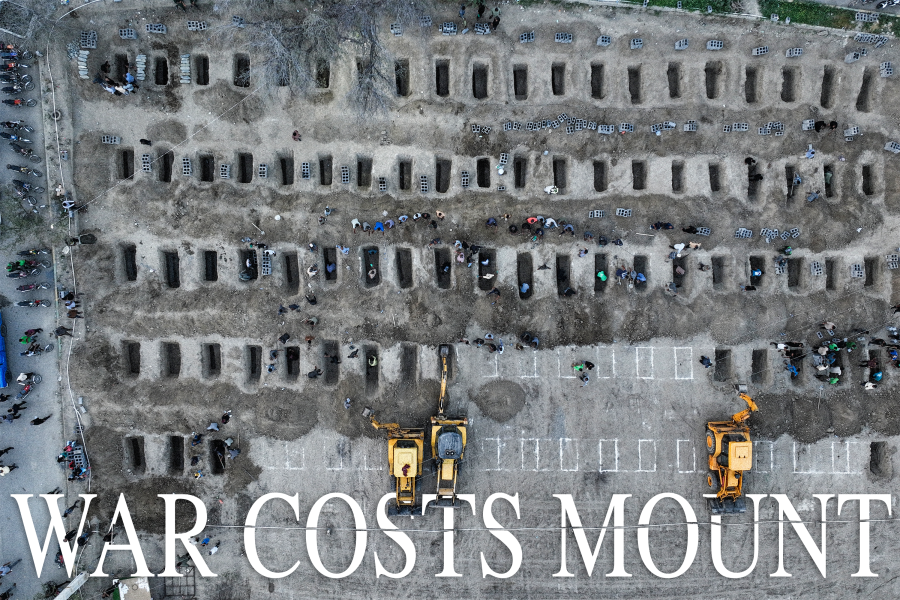
In this aerial photo, mourners dig graves during the funeral for children killed in a reported strike on a primary school in Iran on March 3, 2026. Iranian media have reported hundreds of Iranian casualties, including at a girls school, although Western reporters have not been able to verify tolls independently. Illustration: Natalie Sanders / MS NOW, photo: Iranian Press Center / AFP via Getty Images
A CONVERSATION WITH JAKE SULLIVAN
As U.S. airstrikes on Iran enter their fourth day, the administration’s rationale continues to shift — from pursuing regime change to pre-empting missile threats to preventing a nuclear weapon. Jake Sullivan, former national security adviser under President Joe Biden and a key negotiator of the 2015 Iran nuclear deal, joined us to discuss the changing justifications, the unanswered strategic questions, and what comes next.
WG: When you hear half a dozen different justifications for this war — from eliminating the supreme leader to imminent nuclear threats to Israel pushing for it — where do you land?
JS: A good rule of thumb is that if you hear a half-dozen different rationales for why we’re taking military action against another country, you probably don’t have a good rationale. It sounds like the administration is just searching to find something to justify what is effectively a war of choice where there was no imminent threat. The nuclear program was nowhere close to being on the brink of Iran producing a nuclear weapon.
MB: The president hasn’t answered the most basic question: Why are we there? Does that bother you?
JS: I think “bother” is an understatement because if you don’t know the why, then there is no clear pathway to achieving your objective. You don’t have an objective to achieve. At the end of the day, my view is that this war has put us into a very complicated position where there are economic effects hitting Americans, there are effects hitting our allies in the region, American service members are dead, and no one in the administration can answer that simple question: why?
JL: There’s reporting that Iran’s missile supply is finite — but so are U.S. interceptors. What are you watching right now?
JS: This is a race. It is a race between the United States and Israel being able to take out and destroy Iranian capabilities on the ground, and Iran running out of those capabilities before the U.S. and its allies do. If Iran can keep shooting, and we don’t have interceptors to take down those missiles and drones, they will do much more damage.
Joe: What is Iran’s strategy at this point?
JS: From Iran’s perspective, their regime right now has one simple goal: survive, weather the storm, ride this out. Their view is that the way to shorten the conflict is to impose maximum pain on the economic centers of the gulf — on technology, on energy, on finance, on tourism — and get the region to say the economic impacts are too great to sustain.
Joe: Let’s turn to Ukraine. After months of being told Ukraine was on the brink of collapse, they’ve now retaken territory from Russia. What’s changed?
JS: That has been the foundational logic of the American approach to “peacemaking” in Ukraine — that Russia is bigger, stronger, tougher, and Ukraine will ultimately lose. And all along, people like you have said that’s just nonsense. Ukraine has capacity, it has technology, and, most importantly, it has courage and resolve. In the last month, the Ukrainians have been able to push forward, stabilize the front line, and impose absolutely astonishing costs on the Russians — 1,000 casualties a day and more.
Joe: How does this conflict in the Middle East affect Ukraine?
JS: Because the United States has been husbanding all of its air defense interceptors for the Middle East, it has not been supplying air defense interceptors to Ukraine for several months now. One of the downsides of entering this war of choice is it means we have less capability to give to the Ukrainians at a moment they really need it.
DI: You’ve worked at the highest levels of national security. What concerns you most about how this president is using U.S. military power?
JS: The capability of the U.S. military is extraordinary — it is just eye-popping. The problem is that if you’re the president and you confuse that operational and tactical brilliance with a tool you can just use willy-nilly around the world, you’re going to get yourself into trouble. If you use that military when you don’t have a clear objective — when you don’t have an answer to the question “why” — you’re putting the enormous power of the United States to work for basically a muddle, a mess, and no clear answer to what comes next.
This conversation has been condensed and edited for brevity and clarity
ON THIS DATE
“The Star-Spangled Banner” was adopted as America’s national anthem by an act of Congress on this day in 1932. Perhaps the most famous rendition of the anthem in our time was Whitney Houston’s spectacular performance at the 1991 Super Bowl.

EXTRA HOT TEA
Half of all colorectal cancer cases are now among people under 65.
GET HAPPY!
What makes you happy? In 2017, a team of researchers from the Massachusetts Institute of Technology posed that question to 10,000 people — then mapped more than 100,000 responses into an interactive “happiness map.”
The results point to one factor that matters more than money, success, or status. See what they found.
ONE MORE SHOT
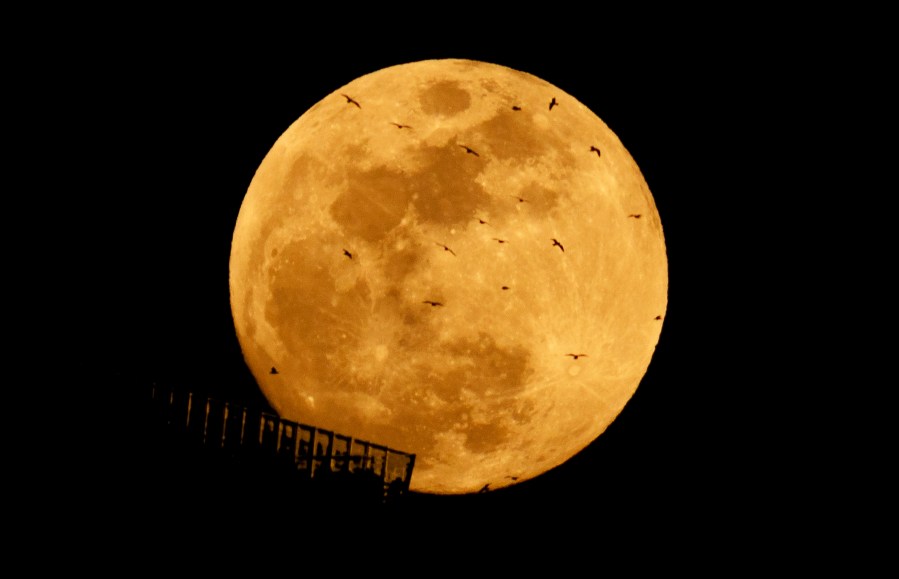
Birds fly in front of the Worm Moon as it rises behind the Edge outdoor observation deck at Hudson Yards in New York City ahead of a total lunar eclipse on March 2, 2026, as seen from Hoboken, New Jersey.
CATCH UP ON MORNING JOE









Become a member to join the discussion