This is an adapted excerpt from the March 1 episode of “Velshi.”
For more than two centuries, the United States has tried occasionally to remove foreign governments and replace them with something else — sometimes overtly (through invasion), sometimes covertly (through intelligence operations) and sometimes through economic pressure and political engineering.
When considering the success of these attempts to intervene abroad, it’s necessary to recognize an important distinction: There is tactical success, and there is strategic success.
Tactical success means the targeted government falls. Strategic success involves much more: a stable political order emerges, violence declines, institutions function, legitimacy takes root and the outcome advances security without producing greater instability in the targeted country and its region.
Tactically, the U.S. plan worked. Strategically, the longer arc tells a different story.
In the late 19th and early 20th centuries, the U.S. repeatedly intervened in the Caribbean and Central America.
American forces at various points occupied Cuba, Haiti, the Dominican Republic and Nicaragua. Governments were reshaped or replaced, customs houses were placed under American control, and leaders aligned with U.S. interests were installed or propped up.
Tactically, those efforts often succeeded. Washington got compliant governments and protected commercial routes. Strategically, the record is mixed at best. Many of those countries experienced prolonged instability, cycles of authoritarian rule and enduring resentment toward the U.S.
During the Cold War, regime change became more systematic. It started in Iran in 1953, when the CIA helped to orchestrate the removal of Prime Minister Mohammad Mossadegh after he nationalized the country’s oil industry.
After Mossadegh was removed, Shah Mohammad Reza Pahlavi consolidated power as a monarch, and Iranians’ hopes to become a working democracy were dashed.
Tactically, the U.S. plan worked. Strategically, the longer arc tells a different story.
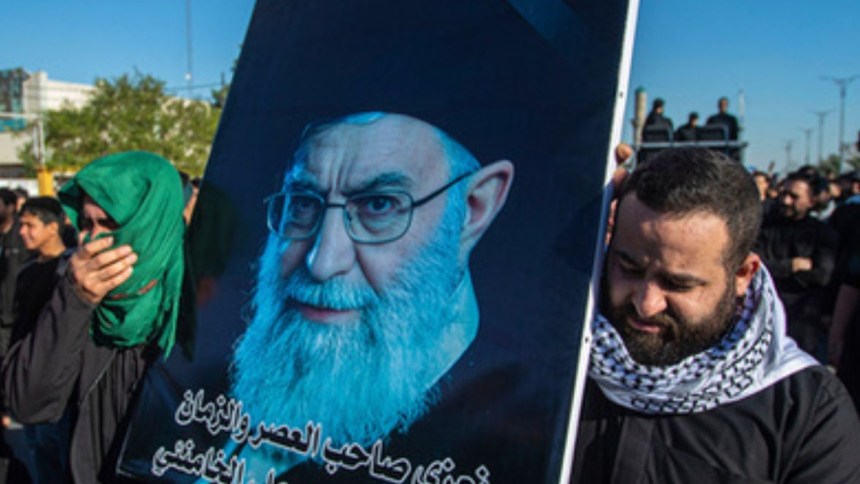
Decades of the shah’s autocratic rule fueled opposition that culminated in the 1979 Iranian Revolution. The regime that replaced him, the Islamic Republic of Iran, became one of the U.S.’ most enduring adversaries.
Let’s go back to the 1950s. A year after the overthrow of Iran’s government, the U.S. backed a coup in Guatemala against President Jacobo Árbenz.
Árbenz fell, but what followed was not democratic consolidation. Instead, Guatemala descended into decades of civil conflict that cost more than 200,000 lives, many of them civilians.
In 1973, the U.S. supported efforts to destabilize Chile’s elected president, Salvador Allende. A military coup led by General Augusto Pinochet removed Allende from power. Pinochet ruled for 17 years, and during that time, thousands of his opponents were killed or disappeared.
Again, a government changed, but stability and legitimacy proved far more complicated.
However, there are some cases often cited as success stories of U.S. regime change efforts.
After World War II, the U.S. occupied Germany and Japan. Their political systems were transformed and both became stable democracies and close American allies.
But those cases followed total war; they involved unconditional surrender, massive troop presence, long-term reconstruction and broad domestic exhaustion with prior regimes. They were not quick, covert operations; they were comprehensive national rebuilds under extraordinary circumstances.
After the Cold War, regime change reappeared in new forms. In 2003, the U.S. invaded Iraq and removed Saddam Hussein. The stated rationale centered on weapons of mass destruction and links to terrorism.
Hussein fell quickly, but those weapons were never found. What followed was insurgency, sectarian violence, the disbanding of Iraqi security forces, the rise of extremist groups such as ISIS and years of instability. Hundreds of thousands of Iraqis were killed, thousands of American service members lost their lives and trillions of dollars were spent.
When policymakers consider regime change, history suggests the central question should not be whether a government can be removed but rather what comes next.
Iraq today has an elected government, but it remains fragile, deeply influenced by regional power struggles, including by Iran.
Afghanistan offers a parallel lesson. In 2001, the U.S. removed the Taliban regime after the Sept. 11 attacks, installing a new government with international backing.
For 20 years, American and allied forces supported that new government, but in 2021, after the U.S. withdrawal, the Taliban returned to power in a matter of days.
Tactically, the Taliban had been removed. Strategically, the political order proved unsustainable without sustained foreign support.
So what do we learn from two centuries of evidence?
First, the U.S., with its formidable military and intelligence capabilities, is capable of removing governments.
Second, building legitimate political institutions in another country is far more difficult than toppling a regime. Political legitimacy cannot be airlifted in — it grows from local institutions, social trust, economic opportunity and political inclusion.
Third, unintended consequences are common. Regime change can weaken state institutions, create power vacuums, intensify factional competition and fuel nationalism directed at the intervening power.
And fourth, the costs are rarely limited to the moment of intervention — they echo for decades.
None of this means that every intervention is bound to fail. Germany and Japan show that under specific historical conditions, political transformation can endure.
But those conditions were extraordinary. They involved total military defeat, unified international support, massive reconstruction and long-term occupation. Most regime change efforts do not occur under those circumstances.
When policymakers consider regime change, history suggests the central question should not be whether a government can be removed but rather what comes next. Who governs, and with what legitimacy? Will that new government be sustained by an internal political settlement?
If those questions do not have credible answers, removal is not a strategy. Rather, it is simply an event.
Allison Detzel contributed.