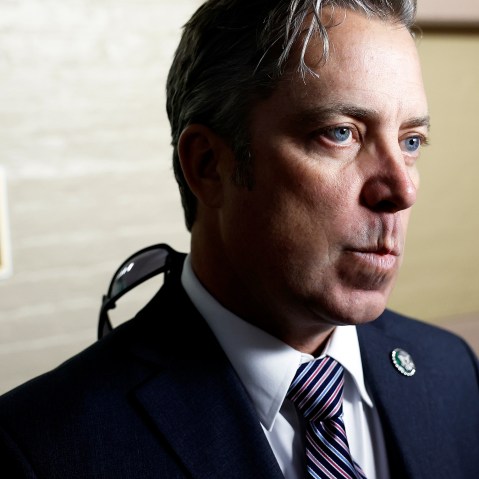
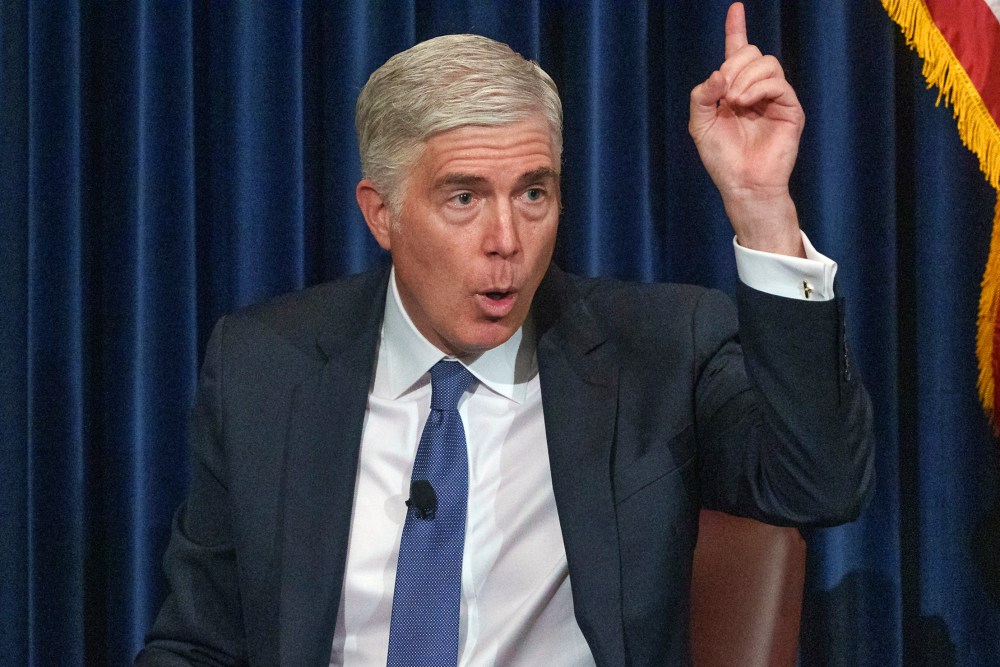
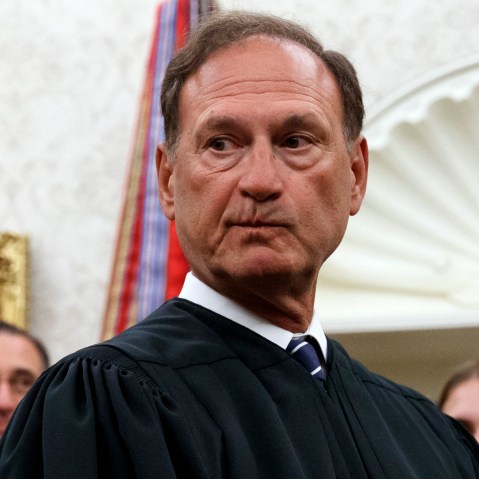
When the Supreme Court heard arguments in the tariffs case in November, anyone with internet access could’ve listened in live. But that option wasn’t available when Chief Justice John Roberts announced the tariffs opinion on Friday.
The dichotomy isn’t a one-off glitch. It’s a feature of the court’s selectively transparent design. It chooses to livestream and post audio of hearings but refuses to do so when it announces the outcomes of those hearings.
This doesn’t make sense.
Both events occur in open court and are freely available to anyone who can squeeze into the court’s limited seating on a given day. Plus, the audio of opinion announcements does become available eventually — generally the following term, after the court sends it to the National Archives and the Oyez website publishes it on the respective pages for all the cases it catalogues.
Oyez, which is run by Cornell’s Legal Information Institute, Justia and Chicago-Kent College of Law, is a great resource. You can see an example of the audio it stores, for example, in the presidential immunity case of Trump v. United States.
Because that case was decided almost two years ago, the entry by now contains Roberts’ announcement of his opinion, as well as Justice Sonia Sotomayor’s dissent. The latter is crucial because a justice’s choice to dissent from the bench is a rare signal of their view of the importance of a case and how badly they think the majority erred.
But while listeners could’ve instantly heard Roberts’ and Sotomayor’s questions to the lawyers at the immunity hearing, they couldn’t have heard the justices’ chosen statements on the matter’s conclusion.
This doesn’t make sense.
Even the nonsensical status quo has its own problems, as watchdog group Fix the Court highlighted Wednesday. The group observed that last term’s audio still hadn’t been posted, so it obtained the audio files from the Archives and posted them itself. On the watchdog’s website, we can now listen in, for example, to Sotomayor’s dissent from the court’s ruling last term in litigation over President Donald Trump’s bid to end birthright citizenship, which is back at the court this term.
Fix the Court’s efforts are appreciated here. They also shouldn’t be needed. Its executive director, Gabe Roth, acknowledged as much in announcing the audio it obtained and posted. “This is not hard: the Court should livestream the audio of opinion announcements and post the audio files on its website later in the day as it does for oral arguments,” he said.
In his statement, Roth noted a possible reason for the court’s refusal to be consistently transparent. “The reluctance to take this step stems from the Court’s concern that someone listening might think a stray statement from the announcement — justices often use humor and condense the facts of a case in these sessions; the horror! — has the weight of law. But the nine could easily correct this misperception during their oral summaries,” he said. “The American people deserve the transparency that technology allows, especially from an all-powerful, camera-less institution like SCOTUS, and live audio of opinion announcements isn’t too much to ask.”
It’s also true that the court publishes the opinions on its website when they’re announced. But that doesn’t change the fact that, in simultaneously announcing the opinions in open court, the justices are choosing to make certain statements while choosing to share those statements only with a relatively small audience, for a limited time, until the audio becomes widely published at some undetermined point in the future. It’s a false choice to say that, because the opinions are published, live audio of the announcements isn’t needed. It’s not an either/or thing. The people bound by these rulings should be free to avail themselves of either, both or neither.
And with justices who are critical of the media generally, why wouldn’t they want to be able to speak directly to the people?
At any rate, Roth is correct that audio consistency is a small ask — especially, as he pointed out, because the court doesn’t televise its public proceedings. It should do that, too. But in the meantime, consistent audio publication would be a modest improvement.
Subscribe to the Deadline: Legal Newsletter for expert analysis on the top legal stories of the week, including updates from the Supreme Court and developments in the Trump administration’s legal cases.
Have any questions or comments for me? Please submit them through this form for a chance to be featured in the Deadline: Legal Blog and newsletter.