The Texas primary for the Republican nomination for U.S. Senate is, for lack of a better term, a hot mess.
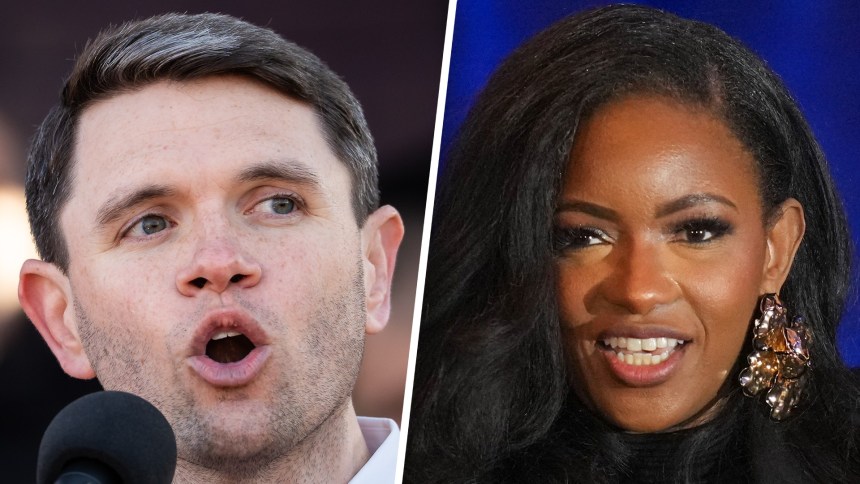
Sen. John Cornyn, who has held the seat since 2002, is facing challenges from Attorney General Ken Paxton and Rep. Wesley Hunt, from the Houston area. It’s almost certain that neither Cornyn nor Paxton will reach 50%, meaning the race will drag on until a May 26 runoff. Meantime, the Democratic primary will likely be decisive, unless that race turns out to be closer than expected.
For Republicans, that’s three more months of infighting while the Democratic nominee gets a head start on the general election — meaning the national party will need to spend more resources to win in what has been a reliably red state in November.
A Republican president would have presumably marshaled their resources to clear the field
In the past, a Republican president would have presumably marshaled their resources months ago to clear the field by either backing an incumbent or finding a cushy landing spot for would-be challengers.
But nothing about this Trump-era primary field is typical. Despite months of pressure from Republican leaders to back Cornyn, President Donald Trump has amplified the feeding frenzy by essentially endorsing all three candidates.
“I like all three of them, actually,” Trump told reporters aboard Air Force One last week. “You’re supposed to pick one, so we’ll see what happens. But I support all three.”
Making this even more inexplicable is the fact that Trump remains the most powerful kingmaker in Republican politics — especially in Texas. A recent poll from the University of Houston’s Hobby School of Public Affairs found that 55% of GOP primary voters are more likely to back a candidate hand-picked by the president.
In a bygone era of the GOP, Cornyn would have been the obvious favorite as a long‑serving senator with deep ties to leadership in the upper chamber. But as a self-styled outsider, Trump has often leaned toward more unconventional endorsements. Trump’s non-endorsement may have even given Paxton a boost by putting him on the same level as a four-term incumbent.
“No matter how you slice it, the insurgents have won,” said Brandon Rottinghaus, a political science professor at the University of Houston.
The president’s silence has only reinforced Paxton’s political armor.
After 20-plus years in public office, Paxton’s brand of hard‑right conservatism has earned him a loyal base of Texas voters. And despite an impeachment, an FBI investigation and a very messy public divorce, Paxton appears to enjoy the same scandal‑proof Teflon that has covered Trump. The president’s silence has only reinforced this political armor.
“If Trump endorsed Cornyn early, you might have had a rebellion here in Texas and Cornyn still would have lost,” Rice University political scientist Mark Jones said. And yet, without an endorsement, “it’s going to be real uphill sledding for [Cornyn] to try to defeat Paxton in a May runoff,” he added.
Trump’s silence has also allowed him to avoid alienating either faction of the GOP, while also allowing all three candidates to claim the president’s mantle.
“They’re all pledging loyalty to Donald Trump,” Rottinghaus said. “A voter can be forgiven for being confused about who actually has the endorsement.”
However it shakes out, it’s clear the runoff math poses real risks for Cornyn and opens the party up to more risks in the general election.
While polls show Republicans are favored to come out on top in the general election, many show a lead within the margin of error. Some Republicans have been fretting for months about the chance, however small, that a Paxton win could open a window for Democrats to snag a Texas Senate seat for the first time in over 30 years.
Historically, there is a significant drop‑off in turnout in Texas primaries versus runoffs. Some experts predict that roughly 2 to 2.5 million voters will participate in the March primary, though those numbers could drop by half in May. Yet that smaller, more ideologically driven electorate could be exactly the one Paxton needs to score a win.
“The people who turn out in the runoff tend to be a little more conservative,” Jones said. “You’re dealing more with diehard partisans and fewer Republican leaners and independents. All other things being equal, that’s bad news for Cornyn and good news for Paxton.”
Beyond the Senate seat, Cornyn has leaned into the argument that a Paxton win would open the door to Democratic gains down the ballot.
“If Ken Paxton is the nominee, we could well experience a massacre, and the first Democrat elected since 1994 in the state of Texas,” Cornyn told supporters in Fort Worth on Wednesday.
Trump could still weigh in at any time. But so far, his silence has already reshaped the race, making it more politically volatile and putting an incumbent Republican and a normally safe Senate seat at risk.
This is a preview of MS NOW’s Project 47 Newsletter. As President Donald Trump continues implementing his ambitious agenda, get expert analysis on the administration’s latest actions and how others are pushing back sent straight to your inbox every Tuesday. Sign up now.