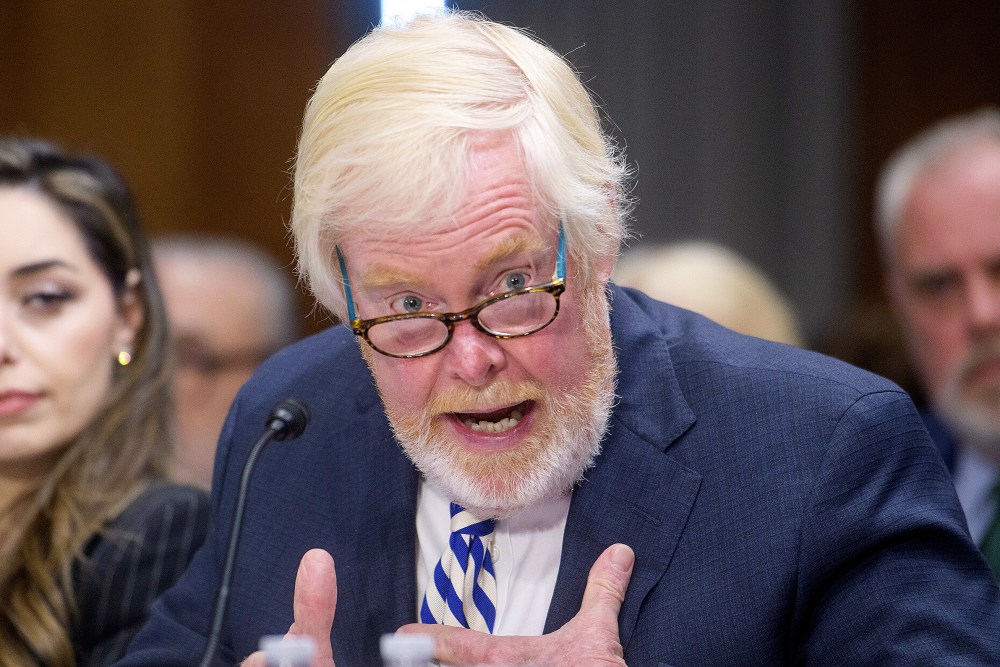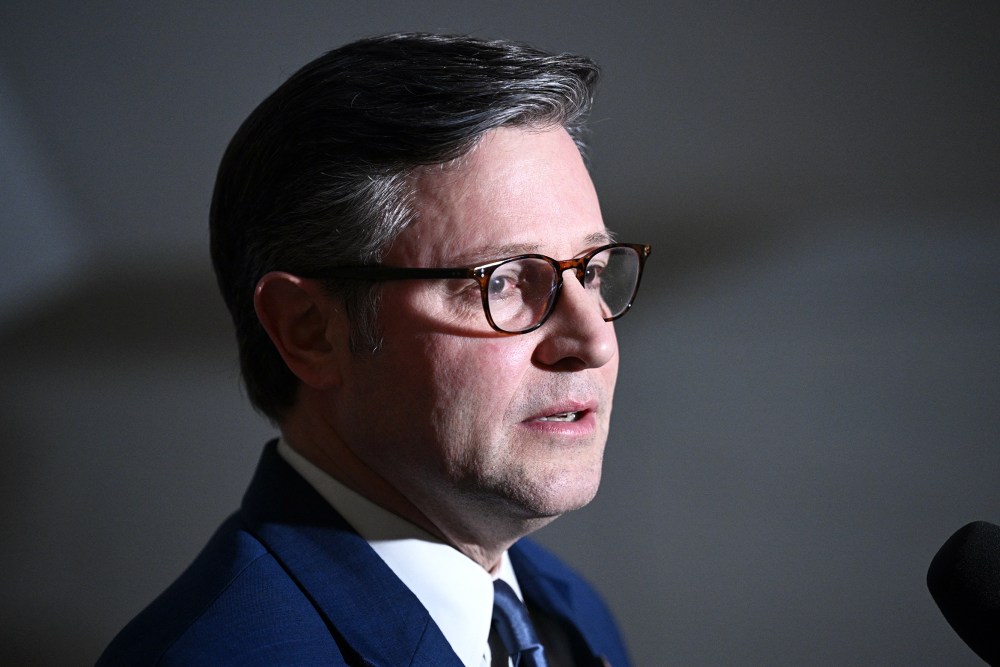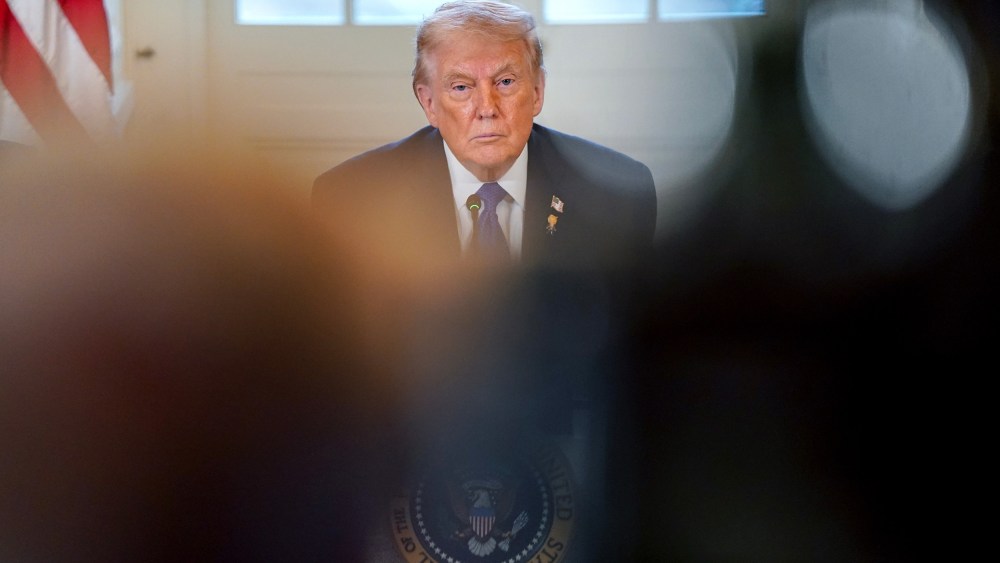
President Donald Trump was very clear this week: He wants Republicans to “take over” elections and “nationalize” the voting process.
To GOP senators, however, it’s difficult to say what the president means.
On Monday, during a podcast with former FBI Deputy Director Dan Bongino, Trump said Republicans “ought to nationalize the voting.” He followed that up in the Oval Office on Tuesday by saying that if states “can’t count the votes legally and honestly, then somebody else should take over.”

But for GOP senators, that’s not what Trump said.
When asked on Thursday about Trump’s comments about nationalizing elections, Sen. Rick Scott, R-Fla., told MS NOW he hadn’t talked to Trump about that.
“I’ve talked to him about the SAVE America act, where we make sure that people use IDs and that they have to be a citizen in order to register to vote,” Scott said. “But I haven’t talked to him about anything else.”
For other Republicans, it was a similar act: Just assert that Trump is talking about the SAVE Act, or the expanded SAVE America Act. Both bills would require voters to show proof of citizenship when registering to vote, in addition to requiring a voter ID when voting in the SAVE America Act.
“What I assume he meant by it is that we ought to pass — Congress ought to pass the SAVE Act, which I’m co-sponsor of,” Sen. Josh Hawley, R-Mo., told reporters Wednesday.
Sen. John Boozman, R-Ark., also framed Trump’s comments as the president trying to “make it such that people that are here — that are citizens — are the ones that are voting in elections.”
“That’s far, far from nationalizing the election,” Boozman said.
Sen. Eric Schmitt, R-Mo., similarly said he believed the White House had “clarified that statement about what it means is to pass the SAVE Act.”
Initially, Sen. John Kennedy, R-La., incorrectly said Trump didn’t call to “nationalize” elections. “Those are your words, not his,” Kennedy told MS NOW.
When Kennedy was informed Trump had used that word himself — he said he wanted to “nationalize” the voting — Kennedy deflected.
“You know what, cowboy, then you need to go talk to the president,” Kennedy said. “Do I look like the president?”
But pressed on whether states or the federal government should be running elections, Kennedy said, “Under the Constitution, the states have a very vital role in elections, and I respect it.”
Other GOP senators brushed off Trump’s comments by noting the difficulty of the president’s suggestion.
While Sen. Jon Husted, R-Ohio, said the president’s “concern about election integrity is merited,” he also noted that he had previously served as Ohio’s secretary of state and that “the Constitution limits how much the federal role can be in elections.”
Senate Majority Leader John Thune, R-S.D., similarly pointed to the Constitution.
“I’m not in favor of federalizing elections,” Thune told reporters Tuesday. “I mean, I think that’s a constitutional issue.”
According to Article 1, Section 4 of the Constitution, “The Times, Places and Manner of holding Elections for Senators and Representatives, shall be prescribed in each State by the Legislature thereof; but the Congress may at any time by Law make or alter such Regulations, except as to the Places of chusing Senators.”
Not every GOP senator was so defensive of Trump. Sen. Shelley Moore Capito, R-W.Va., argued that dispersing control of elections is a “protective device,” which helps in preventing cyberattacks or those who may want to hack into election systems.
“He thinks that’s safer,” Capito said of Trump’s push to nationalize elections. “I, personally, don’t.”
Trump’s comments — and the response on Capitol Hill — came during a week when U.S. elections were in the spotlight.

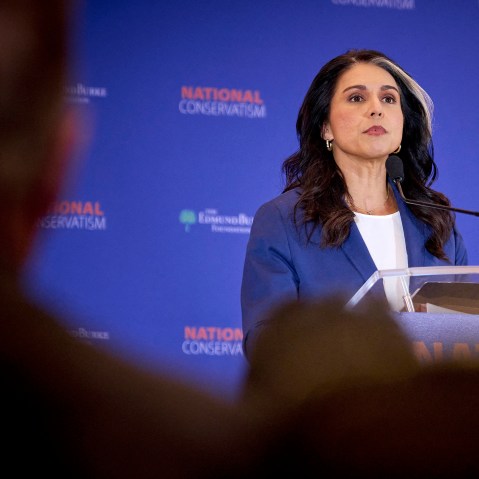
After the director of national intelligence, Tulsi Gabbard, attended an FBI raid of a Georgia election facility, Sen. Mark Warner, D-Va., warned that Gabbard’s involvement in a domestic criminal investigation reminded him of “Nixonian, Watergate-style policies.”
He noted that Trump’s comments, Gabbard’s presence at the FBI raid and the possibility of Immigration and Customs Enforcement officers patrolling polling places all add up to a broad threat to the 2026 elections.
“Unfortunately, it appears there may be a coordinated effort to try to interfere with elections,” Warner told reporters Thursday. He said he was specifically concerned about “ICE trying to intimidate registered voters from showing up at polling stations in an intimidation move.”
Sen. Thom Tillis, R-N.C., echoed those concerns. He declined to say whether Congress should stop ICE from posting agents near polling places, but he told MS NOW he’s worried it could suppress turnout by intimidating Hispanic voters.
“It could have a chilling effect on even U.S. citizens going to the polls because they don’t want to be detained and have to prove citizenship,” Tillis said Thursday. “Which, in some cases, we’ve even had reports saying that ‘well, you really ought to carry your passport more often.’ A lot of people in the U.S. don’t even have passports. So I think that could arguably be a problem for turnout.”
On Thursday, White House press secretary Karoline Leavitt said she “can’t guarantee that an ICE agent won’t be around a polling location in November,” but added that she hadn’t “heard the president discuss any formal plans to put ICE outside of polling locations.”
As Trump continues to repeat his calls for federal control of the polls ahead of this year’s midterms, Democrats say they need Republicans to draw a line in the sand.
“It’s not just left to Democrats; it’s left to Republicans and every American to stand up and call this president out when he tries to violate the laws of this country, particularly to control an election,” Sen. Catherine Cortez Masto, D-Nev., told MS NOW.
And Sen. Elizabeth Warren, D-Mass., said it was clear: “Elections are state-managed, not president of the United States-managed.”
“We plan to abide by the Constitution and force the president to do the same,” she said.