As the fight over federal immigration enforcement engulfs the Twin Cities, several cases making their way through Minnesota federal courts will hold significant ramifications for the Trump administration’s mass immigration enforcement agenda.
On Monday a federal judge in Minnesota ordered the Trump administration to explain the motives behind the federal immigration crackdown in the state.
U.S. District Judge Katherine Menendez, a Biden appointee, heard arguments from attorneys for the state of Minnesota in a case brought on Jan. 12 that seeks an immediate pause to Operation Metro Surge — the name for the Department of Homeland Security’s mass immigration enforcement operation in Minneapolis and St. Paul, which has turned deadly in recent weeks.
The lawsuit, filed by Minnesota Attorney General Keith Ellison days after Renee Good was fatally shot in Minneapolis by a federal immigration officer, argued that the surge of federal officers in the city was “an alarming escalation” of the Trump administration’s “retaliatory actions” against Minnesota.
Menendez declined to rule in that case Monday, ordering instead that the government respond to arguments from the state that the surge is a coercion tactic designed to force Minnesota to fold to the federal government’s demands. DHS must explain its motives by Wednesday evening.
The federal government must address the state’s assertion that the purpose of the operation is designed to “punish” Minnesota for adopting sanctuary laws and policies, to “coerce” the state into changing state and local laws and to “compel” state officials to share information with federal immigration agents to aid enforcement operations, Menendez said in the order.
As tensions reached a fever pitch after the killing of Alex Jeffrey Pretti by federal immigration enforcement officers in Minneapolis on Saturday, U.S. District Court Judge Eric Tostrud, a Trump appointee, issued a temporary restraining order to prevent U.S. officials from “destroying or altering” evidence related to the fatal shooting of Pretti.
On Monday, the federal government argued that the restraining order was not necessary and said that state law enforcement agencies had no constitutional authority “to dictate the federal government’s evidence-preservation procedure.”
But Minnesota officials said the federal investigators denied them access to the scene after Pretti was killed. The Force Investigations Unit of the state’s Bureau of Criminal Apprehension, which typically leads inquiries into use-of-force incidents involving law enforcement officers, was also blocked from investigating last month’s killing of Good.
Tostrud did not rule on the order he issued Monday. He could expand its scope, limit it or eliminate it altogether. Minnesota Deputy Solicitor General Peter Farrell filed a declaration of support for the order Tuesday. Farrell raised concern about the Trump administration’s demonization of Pretti’s character — top officials including Homeland Security Secretary Kristi Noem and White House deputy chief of staff Stephen Miller labeled Pretti a “domestic terrorist” in the hours after his death.
Farrell included a post from DHS on its official X account that showed Pretti’s gun, which he had been legally carrying via a concealed carry permit at the time of his death, sitting on a car seat, proving it had been removed from the scene before state investigators could assess the evidence. Dueling accounts of Pretti’s death from administration officials and eyewitness videos shared widely on social media have raised questions about the events leading up to the fatal shooting.
BCA officers returned to the scene of Pretti’s death on Tuesday, but it was unclear whether federal officials had shared investigation details with the bureau.
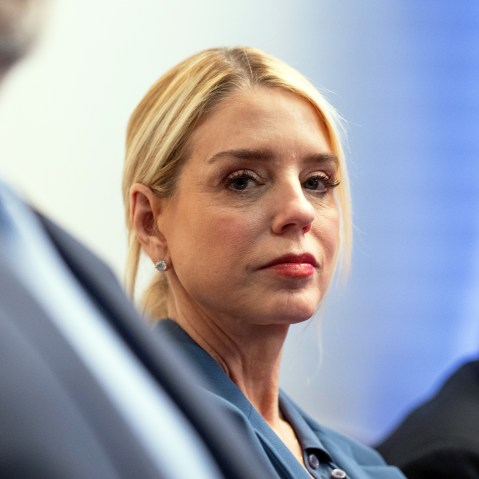
In the hearing on removing immigration officers from the state, Menendez referred to a letter Attorney General Pam Bondi sent to Minnesota Gov. Tim Walz in the hours after Pretti’s death.
Bondi outlined three demands she said would “bring an end to the chaos in Minnesota.” The first demand was for records from the state’s federally funded welfare systems; the second was for Minneapolis to cease its sanctuary city policies. Both were cited by DHS as reasons for sending thousands of Immigration and Customs Enforcement and Customs and Border Protection officers to the area.
But Bondi also demanded Minnesota turn over private voter roll data to the Department of Justice — a reiteration of the Trump administration’s push to obtain sensitive voter information from states across the country.
“Is the executive trying to achieve a goal through force that it cannot achieve through the courts?” Menendez asked, noting that all three of Bondi’s demands are being litigated.
The Justice Department sued Minnesota, along with five other states, in September after it refused to comply with federal demands for private voter information. The DOJ has sued at least 24 Democratic-controlled states and territories to try to force them to turn over their voter data.
“Her letter is an outrageous attempt to coerce Minnesota into giving the federal government private data on millions of U.S. Citizens in violation of state and federal law,” Minnesota Secretary of State Steve Simon said in a statement Monday.
Simon said his department, which has jurisdiction over the state’s voter rolls, does not intend to turn over the rolls to the Justice Department.
“It is deeply disturbing that the U.S. Attorney General would make this unlawful request a part of an apparent ransom to pay for our state’s peace and security,” Simon said.