UPDATE (Dec. 28, 2025, 12:18 p.m. ET): Two of the countries discussed in this article, Thailand and Cambodia, signed a temporary cease-fire on Saturday. The text below has been updated.
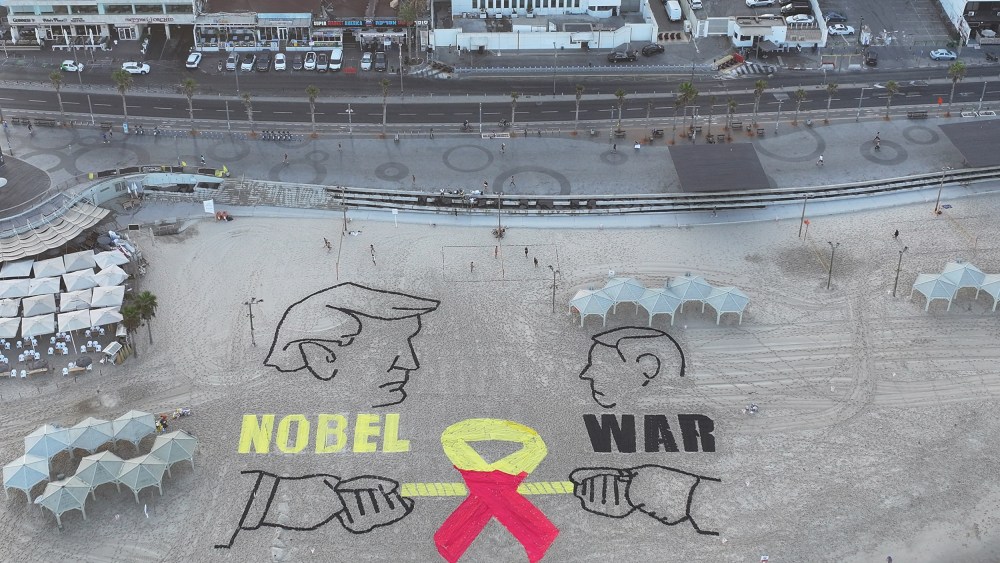
If there is a common theme in President Donald Trump’s foreign policy this year, it’s that the commander-in-chief is desperate for the Nobel Peace Prize. In his inauguration address, Trump proclaimed that “my proudest legacy will be that of a peacemaker and a unifier.” Foreign leaders and FIFA have tried to curry favor by nominating him for the Nobel and praising Trump’s peacemaking credentials. Trump routinely hails his own ability to get warring parties to settle their differences diplomatically.
The administration’s National Security Strategy, released in December, credits Trump with resolving eight wars in the first eight months of his second term and designates the task of stopping local conflicts from spiraling into global problems as a core principal of U.S. foreign policy.
Do Trump’s accomplishments actually square with his own rhetoric?
But does the state of the world actually support Trump’s vision of himself as a peacemaker in chief? And do Trump’s accomplishments actually square with his own rhetoric?
As previous U.S. presidents have learned, talking about peace is not the same as achieving it. Signing short-term cease-fires, sweeping long-standing political or territorial grievances under the rug and declaring victory isn’t the same as ending wars either. Let’s consider the geopolitical landscape and some of the conflicts Trump claims to have resolved. Many are at risk of breaking down or have already collapsed into renewed violence.

The border war between Thailand and Cambodia is a case in point. Early in the summer, the two Southeast Asian countries got into a violent skirmish over contested territory each claims as its own. Thai fighter aircraft bombed Cambodian military positions, Cambodian troops fired short-range rockets into Thailand, and hundreds of thousands of people in total were displaced from their homes. To Trump’s credit, he sensed an opportunity and used the threat of tariffs to bring both countries into direct negotiations. The gambit worked in the short term; Thailand and Cambodia agreed to a cease-fire and solidified the deal in writing in October. The agreement reinforced the truce, established a monitoring committee to oversee implementation and mandated a pullback of heavy weapons from the area. Trump, who presided over the signing ceremony, was jubilant about his success and bragged about how “amazing” it was to have ended the conflict so quickly.

Yet in reality, nothing was solved. The problems were just deferred. Trump moved on to other things and implementation on all aspects of the accord, including the pullback of weapons systems, bogged down into claims and counterclaims. Thailand stalled on its commitment to release the Cambodian troops captured during the hostilities, and a Thai soldier was killed by a Cambodian land mine. Cross-border fighting resumed in December, causing more deaths. Trump’s Dec. 12 statement that he pressured both sides to agree to yet another cease-fire was quickly undercut by Thai Prime Minister Anutin Charnvirakul, who said no such agreement occurred. Trump’s October deal looked precarious even as both sides pledged to renew talks this month. Thailand and Cambodia agreed Saturday to another cease-fire in a bid to stop the most recent fighting, but it is unclear how long this latest agreement will hold.
The years-long war in the Eastern Democratic Republic of the Congo (DRC) is another example of Trump’s declarations failing to match the facts on the ground. The DRC, Africa’s largest country in terms of landmass, has been in a perpetual state of war for nearly 30 years. The conflict is fueled by Congo’s neighbors, including Rwanda, Uganda and Burundi, which all have proxy militias and eye the DRC’s extensive rare earth deposits as a potential source of leverage. Trump again claimed success where others have failed; in June, after months of peace negotiations, the DRC and Rwanda signed an agreement to begin the withdrawal of Rwandan troops from the region as well as the demilitarization of a Democratic Forces for the Liberation of Rwanda, an armed group composed in part by extremist Hutus who helped perpetrate the 1994 genocide. Trump presided over a December signing ceremony where he called the entire affair a “great day” for America and the world.
As previous U.S. presidents have learned, talking about peace is not the same as achieving it.
But fighting resumed a day later, when the M23 — the Eastern DRC’s most powerful rebel movement, which wasn’t included in Trump’s negotiations — launched a fresh offensive to capture more territory. The M23 controls the Eastern DRC’s two largest cities; and it is consolidating its authority by establishing a quasi-government outside the reaches of the DRC government. Meanwhile, the DRC continues to blame Rwanda for backing the offensive with military supplies as well as troops, an allegation that Mike Waltz, Trump’s ambassador to the United Nations, seconded during an address to the Security Council this month.
Even the war in Gaza, which Trump made very high-profile claims to have ended, isn’t necessarily resolved. Trump deserves commendation for getting Israel and Hamas to a truce, certainly. Unlike Joe Biden, Trump hasn’t been shy about expressing annoyance with Israeli Prime Minister Benjamin Netanyahu in public, exhibited most clearly during the 12-day Israel-Iran war in June, when Trump snapped in front of cameras that he wasn’t happy with Israel for nearly shredding the truce he had facilitated hours before. Trump later managed to push Israel into a partial withdrawal from Gaza, even though Netanyahu had repeatedly insisted that no such concession would be made until Hamas agreed to disarm.
But the war in Gaza is by no means over — it’s simply at a low ebb. While large-scale casualties are no longer occurring, the shooting and bombing haven’t stopped. Approximately 400 Palestinians have been killed since the cease-fire went into effect in October. Israeli troops, who still control 53% of Gaza, continue to conduct airstrikes against Hamas targets. On Dec. 13, Israel assassinated Raad Saad, Hamas’s deputy military commander, an action that Hamas viewed as a clear violation of Trump’s 20-point peace plan. Even the Trump administration was unhappy with the strike.
And then there’s Phase 2 of Trump’s peace deal, which is even more complicated than the first. Under the plan, an International Stabilization Force is supposed to deploy to Gaza to help vetted Palestinian police disarm Hamas. Israel, in return, would complete a full withdrawal from Gaza. A new technocratic Palestinian administration, overseen by a Board of Peace, would govern Gaza for the foreseeable future. But none of the details have been worked out. Countries that originally expressed interest in contributing to the international force are reconsidering because they don’t want their soldiers to be used to disarm Hamas. The composition of the Palestinian administration is still a mystery. The same goes for the Board of Peace. Meanwhile, Netanyahu is already preparing for the day when the international force’s mission fails and Israeli forces move back into Gaza at strength, a scenario that would upend what is arguably Trump’s biggest foreign policy accomplishment thus far.
In short, as things stand, Trump’s peacemaking record is at best a mixed bag. Whether next year brings improvements, or a Nobel, is anyone’s guess.