Movie star Sydney Sweeney sparked controversy this summer by participating in an American Eagle ad campaign that touted her “great jeans” and called attention to her blue eyes and blond hair. Some progressives criticized it as a “eugenics dog whistle” for the way it appeared to traffic in tropes of genetic superiority. After avoiding a direct response to the backlash for months, Sweeney finally attempted to deal with it head-on in an interview with People magazine published Friday. But even her apparent bid to address the issue was another dodge that illustrated how hard it is for celebrities to remain apolitical in America today.
Sweeney told People she was “honestly surprised by the reaction” to the ads. (She shouldn’t have been. The ads punned on the word “jeans” to insinuate that Sweeney was genetically elite at a time when the president makes racist comments about immigrants and white supremacist activity is on the rise in America.)
Opposing hate requires being divisive in America today.
“I did it because I love the jeans and love the brand,” she said. “I don’t support the views some people chose to connect to the campaign. Many have assigned motives and labels to me that just aren’t true.” (American Eagle said in a statement that the campaign “is and always was about the jeans. Her jeans. Her story.”)
People magazine wrote that Sweeney said that she is “someone who ‘leads with kindness’ and that she is addressing the campaign backlash to clarify her stance and dispel negativity.”
“Anyone who knows me knows that I’m always trying to bring people together. I’m against hate and divisiveness,” Sweeney told People. “In the past my stance has been to never respond to negative or positive press but recently I have come to realize that my silence regarding this issue has only widened the divide, not closed it. So I hope this new year brings more focus on what connects us instead of what divides us.”
Sweeney’s statement may be well-intentioned, but it’s not clear what she intends to say. She rejected “the motives and labels” some have assigned to her, which is fair. But she doesn’t say which motives and labels, and she doesn’t say why she rejects them. She declines to comment on the substance of the ad campaign itself, or whether she regrets or has reconsidered her participation in it. Ultimately, she lands on only two principles — opposing “hate and divisiveness.”
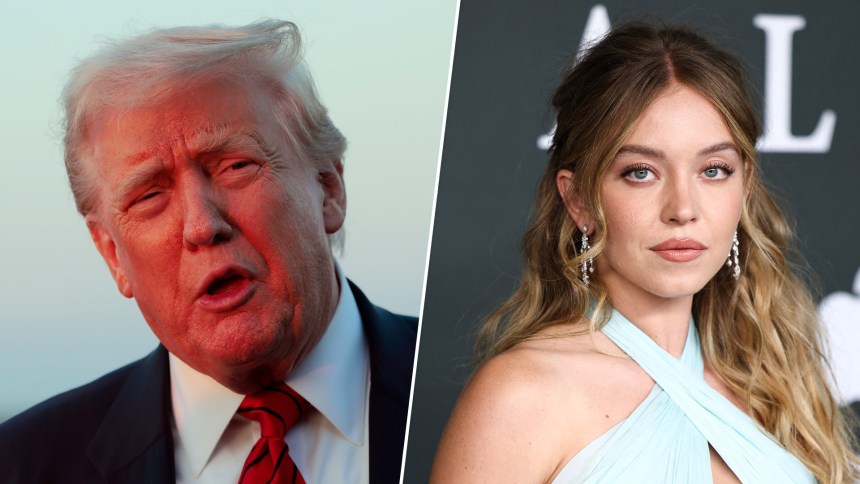
Here’s what Sweeney doesn’t acknowledge: Opposing hate requires being divisive in America today. Generally speaking, opposing “hate” in liberal democracies means opposing bigotry, and vigilance about the kind of language and ideas that help give expression to it.
One need not be a political junkie to be aware that anti-bigotry norms have been under siege throughout the Donald Trump era. We live in a country in which the president warns that immigrants from the Global South are “poisoning the blood of our country” and that Somali immigrants have “destroyed our country.” Politicians from the ruling party tell politicians with South Asian heritage to “go back to the Third World.” One of the most influential media figures on the right, one with vast influence over the GOP, recently conducted a softball interview with Nick Fuentes, a white supremacist who says “Hitler is awesome.”
Perhaps amid the progressive backlash to her ad and the right-wing backlash to the progressives’ backlash, Sweeney has recognized how wordplay about genes could be subsumed by a right-wing movement that fetishizes her beauty in creepy, racialized ways and yearns for her to serve as an avatar of their cause. Perhaps she’s uncomfortable with that and wishes to distance herself from it. Then she should — but she would also need to be willing to reject it in clear language. That would, in turn, require a willingness to alienate some people. You know, the ones who are pretty into the “hate” thing.
Sweeney has no obligation to be an activist, but because she’s a highly public figure, the public will expect her to justify her actions that seep into the political sphere, even if unintentionally. I was not incensed by Sweeney’s participation in the American Eagle ads; I thought it was in poor taste and the wrong decision, but I didn’t think it was fair to assume that Sweeney was necessarily fully cognizant of the darkest subtexts or possible reverberations of the ad campaign at the moment it was released.
However, with so much time to reflect, she should’ve had something more substantive to say. It’s impossible to make everyone like you — it’s better to seek dignity and virtue in standing for something.